Treatment duration
Small tattoos may take minutes; larger or multicolour designs take longer. Sessions are usually separated by several weeks or more.
Progressive tattoo fading
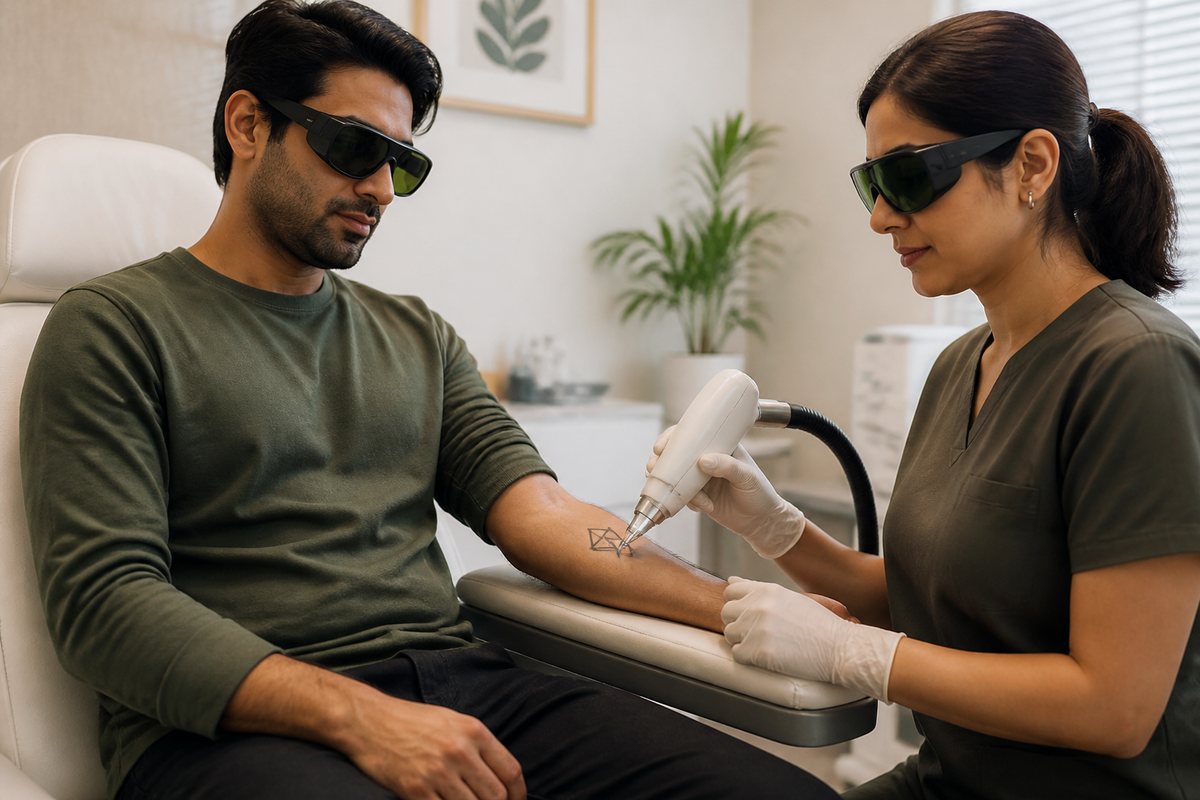
Laser tattoo removal fragments selected ink particles so the body can clear them gradually. Ink colour, depth, density, tattoo age, location, skin tone and scarring influence the response and number of sessions.
Treatment explained
Nanosecond Q-switched or picosecond systems deliver short pulses chosen for particular colours. No single wavelength clears every pigment. Device availability and suitability must be confirmed.
Problems and conditions
Possible suitability
Safety screening
This list is not exhaustive. The treating clinician must confirm contraindications and any condition-specific precautions.
Individual assessment
Assessment records colours, layering, location, tattoo age, previous removal, skin type, medicines, scarring and pigment history. A test spot can help assess reaction but cannot predict complete clearance.
Step-by-step overview
Small tattoos may take minutes; larger or multicolour designs take longer. Sessions are usually separated by several weeks or more.
Cooling is common. Topical or injected local anaesthetic may be considered depending on the area, tattoo and device.
The exact technique, setting and anaesthetic plan require confirmation from the treating clinician after examination.
Downtime and healing
The immediate laser reaction changes quickly.
Protect the area and do not pick.
The immune system clears fragments gradually before reassessment.
Progressive fading is expected rather than immediate disappearance. Some colours resist treatment, and a residual “ghost,” pigment change or scar can remain.
Recovery and result timing are general ranges, not guarantees. Your written instructions and review findings take priority.
Potential benefits
Informed consent
Before treatment
After treatment
Why choose Dr Husnain Aesthetic Clinic?
Care is led by Assoc. Prof. Dr Husnain Khan, MBBS, MCPS, FCPS, MRCS. He has more than 17 years of experience as a plastic surgeon, is Head of the Department of Plastic Surgery at Holy Family Hospital, Rawalpindi, has worked in the UK NHS and is listed with GMC reference 7427786.
These credentials do not guarantee an outcome. The purpose of consultation is to decide whether treatment is reasonable for you and explain alternatives, limitations and follow-up.
Personalised quotation
A responsible quotation follows consultation because price depends on the treatment plan rather than the page name alone. Relevant factors include:
The published rate-list value is not a guaranteed final quotation. Ask what the written quotation includes and whether future sessions, tests, medicines or follow-up are separate.
Read the treatment-cost planning guide →Patient questions
The number varies widely with ink, colour, depth, location, skin and treatment response. It cannot be guaranteed in advance.
Response depends on available wavelengths. Some greens, blues, yellows, white and flesh-coloured pigments can be difficult or behave unpredictably.
Scarring is possible, particularly after aggressive treatment, infection, picking or when the original tattoo already scarred the skin.
Yes, selected patients seek partial fading rather than full clearance. The tattoo artist can advise how much fading is useful.
Skin must heal and the body needs time to clear fragmented ink. Treating too frequently can increase injury.
Short laser pulses can feel sharp. Cooling and selected anaesthesia may improve tolerance.
Cosmetic pigments can darken or change colour after laser exposure, so specialist assessment and test treatment are important.
Avoid tanning and protect the area because sun exposure increases burn and pigment-change risk.
Independent patient information
These external resources support further reading. They do not replace advice from the clinician responsible for your care.
Request a private appointment in Rawalpindi. Patients from Islamabad, elsewhere in Pakistan and overseas can ask what information is needed before travelling.
General patient information · Last reviewed 12 September 2026 · This page does not replace an examination, diagnosis or informed-consent discussion.