A hair transplant redistributes selected follicles from a stable donor area to planned areas of thinning or baldness. It may suit some men and women with an established diagnosis, adequate donor hair and realistic expectations about coverage, density and future hair loss.
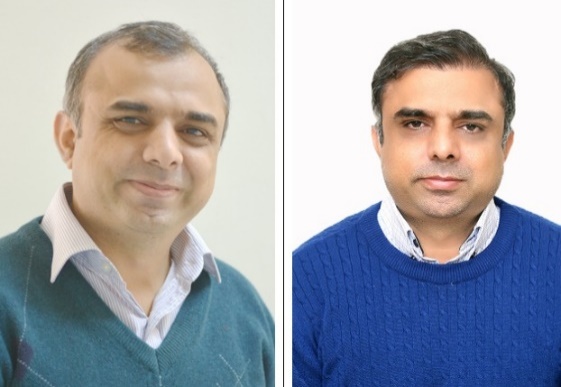
Care led by Assoc. Prof. Dr Husnain KhanMBBS · MCPS · FCPS · MRCS17+ years in plastic surgery
Treatment explained
What is Hair Transplant?
Hair transplantation is a surgical form of hair restoration. Follicular units are harvested from a donor zone, usually at the back and sides of the scalp, prepared carefully and placed into small recipient sites. The procedure does not create new follicles, restore unlimited density or stop non-transplanted hair from thinning in the future.
Problems and conditions
What can Hair Transplant address?
Selected male pattern hair loss affecting the hairline, temples, frontal scalp or crown
Selected female pattern thinning after diagnosis and donor assessment
A naturally high or receded hairline where the proposed design is anatomically appropriate
Selected stable scars after examination of blood supply, skin quality and expectations
Facial-hair or eyebrow loss through separately planned beard or eyebrow transplantation
Possible suitability
Who may be a suitable candidate?
Adults with a clear diagnosis and a reasonably stable pattern of hair loss
Patients with enough permanent-zone donor hair for the proposed coverage
People who understand that donor follicles are finite and cosmetic density is planned strategically
Patients in suitable general health who can follow graft-protection and review instructions
Those willing to discuss medical maintenance for non-transplanted hair when appropriate
Safety screening
Who may not be suitable?
Unexplained rapid shedding or hair loss that has not yet been diagnosed
Active scarring alopecia, scalp infection or uncontrolled inflammatory scalp disease
Diffuse donor miniaturisation or donor supply too limited for the requested coverage
A medical condition, medicine, bleeding risk or nicotine use that makes elective surgery unsafe until addressed
Expectation of guaranteed graft survival, childhood density or complete prevention of future hair loss
This list is not exhaustive. The treating clinician must confirm contraindications and any condition-specific precautions.
Individual assessment
Consultation and treatment planning
Planning begins with the history and pattern of hair loss, family history, scalp symptoms, medicines, previous treatment and general health. The scalp and donor zone are examined for hair calibre, density, miniaturisation, scarring and inflammation. Photographs and measurements help estimate a safe donor limit, the area that can reasonably be covered, a mature hairline design and whether FUE, FUT, medical treatment or observation is the more appropriate next step.
Step-by-step overview
How the treatment is performed
Confirm the diagnosis and long-term planAssess the cause and stability of loss, donor reserve and likely future progression before allocating grafts.
Design the hairline and coverageAgree a natural, age-appropriate outline, priority zones, direction and realistic density within the available donor supply.
Prepare and anaesthetise the scalpTrim only as required, clean the operative areas and use local anaesthetic injections according to the agreed comfort plan.
Harvest donor folliclesRemove follicular units individually with FUE or as a donor strip with FUT, depending on the chosen method and patient factors.
Inspect and protect the graftsSort grafts under magnification and keep them in an appropriate holding solution while recipient sites are prepared.
Create sites and place graftsPlace grafts according to the planned angle, direction and distribution, using finer units at the visible hairline.
Check the result and explain aftercareReview the donor and recipient areas, demonstrate washing and graft protection, and arrange follow-up.
Treatment duration
Many sessions take about 5–10 hours, depending on graft number, method, donor characteristics and operative complexity. A large restoration may be divided into more than one session rather than exceeding a safe donor or procedure limit.
Anaesthesia or comfort measures
Local anaesthetic injections are normally used in both donor and recipient areas. Oral or monitored sedation may be considered in an appropriate clinical setting, but the exact plan must be confirmed during consultation.
The exact technique, setting and anaesthetic plan require confirmation from the treating clinician after examination.
Procedure stages
Hair Transplant in pictures
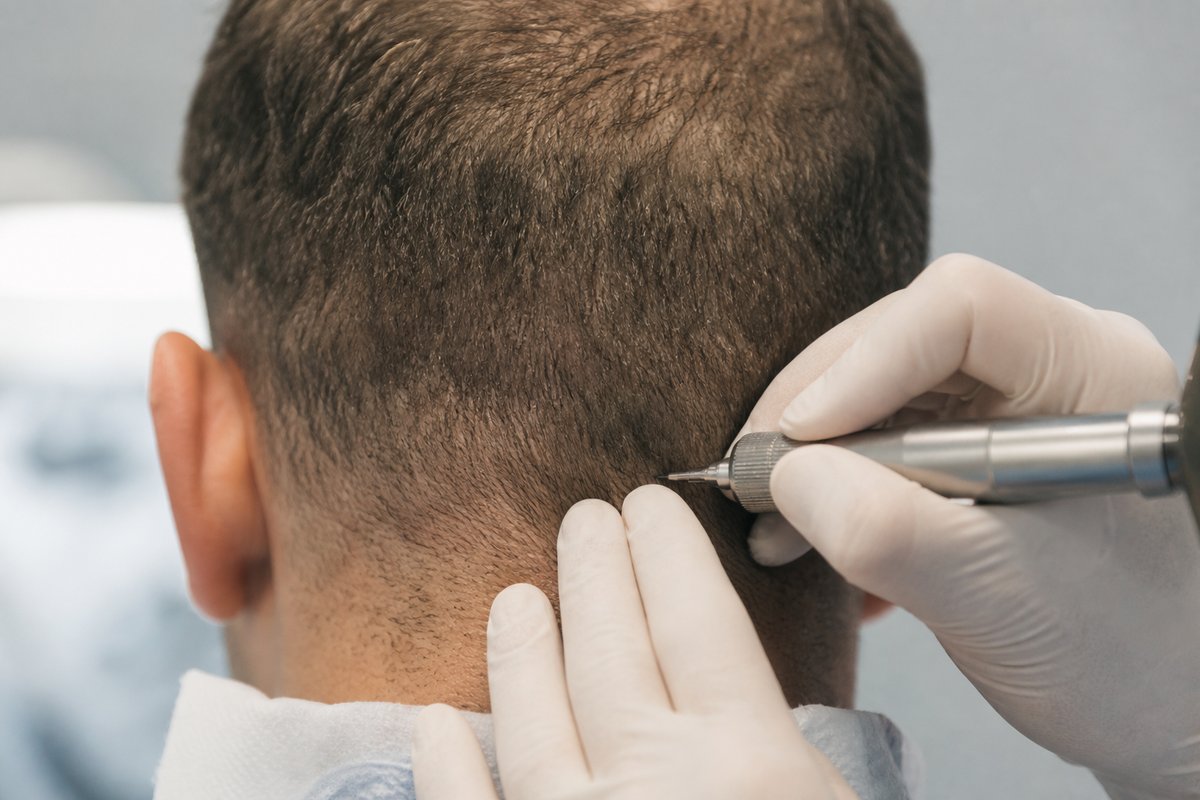
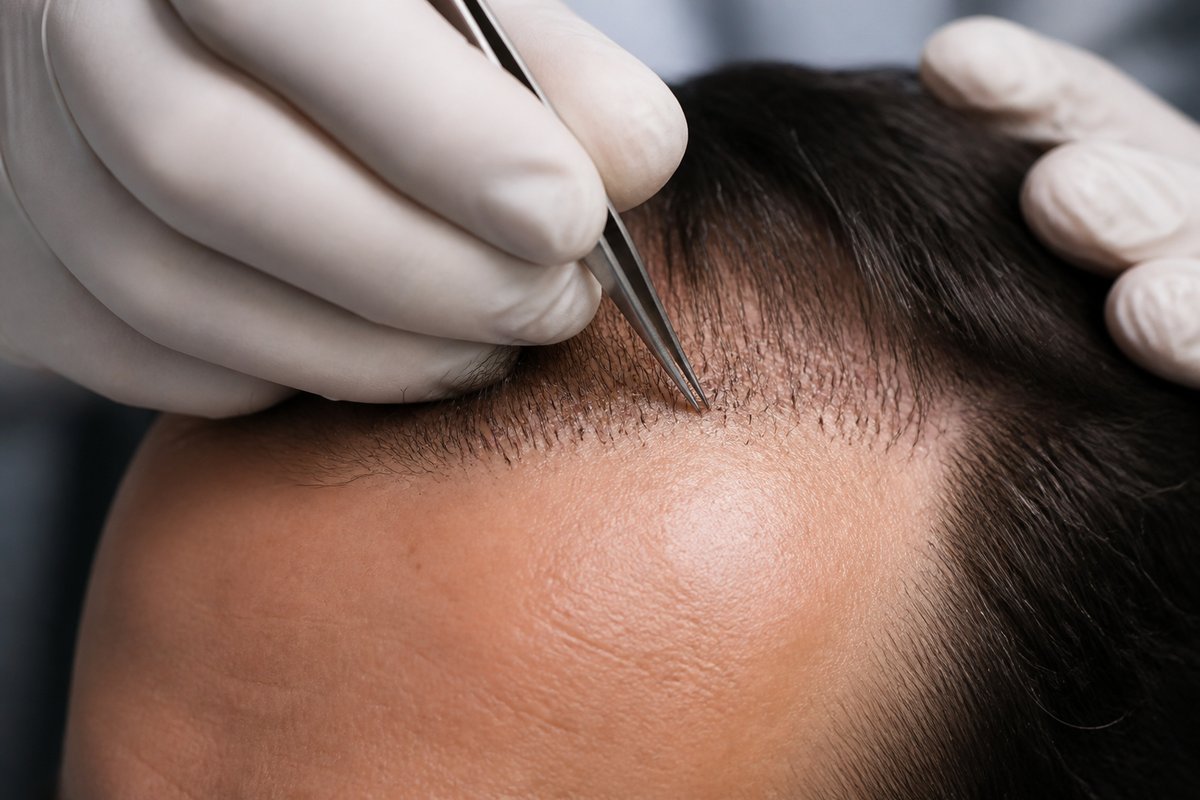
These images show key stages that may form part of a treatment plan. The precise harvesting and placement method depends on the technique selected after examination.
Stage 2Donor extractionStage 3Graft placement
Consented clinical photographs
Patient clinical photographs
Published with patient or guardian consent. Anatomy, treatment plans, healing and outcomes differ between patients; these photographs do not promise or guarantee a result.
Hair transplant assessment
Preoperative
Downtime and healing
Expected recovery period
Protect new graftsFirst 48–72 hours
Avoid rubbing, pressure and scratching, and follow the demonstrated spraying or washing instructions.
Crusting and visible rednessUsually about 7–14 days
Small crusts, tenderness, swelling or redness commonly settle gradually; individual visibility varies.
Temporary sheddingOften 2–8 weeks
Transplanted hair shafts can shed while the follicles enter a resting phase. This does not by itself show whether grafts have survived.
Early new growthOften from 3–4 months
New hairs usually appear gradually and may initially be fine, uneven or slow growing.
MaturationCommonly assessed over 9–15 months
Hair calibre, length and cosmetic coverage develop over time; crown growth can mature later.
When results may become apparent
Successfully transplanted follicles can produce long-lasting hair, but the percentage of grafts that grow, final density, hair calibre and cosmetic effect vary. New growth is gradual, and surrounding non-transplanted hair may continue to thin. A second session or ongoing medical care may sometimes be discussed; no result or graft-survival rate can be guaranteed.
Recovery and result timing are general ranges, not guarantees. Your written instructions and review findings take priority.
Potential benefits
What the treatment may offer
Uses the patient’s own follicles rather than artificial hair fibres
Can rebuild a selected hairline and improve coverage in priority areas
Allows graft direction and distribution to be planned for a natural appearance
Offers FUE and FUT harvesting approaches for different donor needs and preferences
May provide long-term growth from grafts that survive and retain donor characteristics
Informed consent
Risks, limitations and complications
Bleeding, infection, swelling, discomfort, itching or folliculitis
Temporary numbness, altered sensation or shock loss of nearby hair
Visible dot or linear scarring, widened scar, overharvesting or donor thinning
Poor graft growth, uneven density, unnatural angle or an unsuitable hairline design
Cysts, ingrown hairs, delayed healing or pigment change
Progressive loss around transplanted hair and the possible need for future treatment
Anaesthetic or medicine-related complications and dissatisfaction despite technically appropriate care
Before treatment
Preparation instructions
Share the pattern and duration of loss, family history, medicines, supplements, illnesses, pregnancy status and previous treatment.
Do not stop prescribed hair-loss or blood-thinning medicine without the relevant clinician’s approval.
Avoid smoking and nicotine according to the surgical plan because they can impair healing and graft blood supply.
Follow the clinic’s instructions about hair length, washing, colouring and transport on the treatment day.
After treatment
Aftercare
Keep grafts free from rubbing, scratching, tight headwear and direct pressure during the early healing period.
Use only the washing, spraying and prescribed-medicine schedule provided by the clinic.
Sleep with the head elevated if advised and avoid heavy exercise, swimming, helmets and strong sun until cleared.
Do not pick crusts or apply unapproved oils, dyes, fibres or topical products to healing areas.
Attend planned reviews and contact the clinic for increasing pain, spreading redness, pus, fever, uncontrolled bleeding or sudden unusual swelling.
Why choose Dr Husnain Aesthetic Clinic?
Experienced plastic-surgery leadership in Rawalpindi
Care is led by Assoc. Prof. Dr Husnain Khan, MBBS, MCPS, FCPS, MRCS. He has more than 17 years of experience as a plastic surgeon, is Head of the Department of Plastic Surgery at Holy Family Hospital, Rawalpindi, has worked in the UK NHS and is listed with GMC reference 7427786.
These credentials do not guarantee an outcome. The purpose of consultation is to decide whether treatment is reasonable for you and explain alternatives, limitations and follow-up.
These are the clinic-supplied rate-list values. Confirm the current rate and exactly what it includes before booking. Your final written quotation may differ according to the assessed procedure scope, facility, anaesthesia, tests, medicines and follow-up.
A responsible quotation follows consultation because price depends on the treatment plan rather than the page name alone. Relevant factors include:
The number of grafts and size of the priority treatment area
FUE or FUT harvesting method and donor-area complexity
Hairline design, scar work or placement among existing hair
Procedure time, trained clinical team and facility requirements
Medicines, dressings, postoperative reviews and any tests that are clinically indicated
Whether a staged plan or future session is recommended
The published rate-list value is not a guaranteed final quotation. Ask what the written quotation includes and whether future sessions, tests, medicines or follow-up are separate.
FUE removes follicular units individually and usually leaves many small dot scars. FUT removes a narrow donor strip and leaves a linear scar. Donor supply, hairstyle, graft requirement, scarring preference and examination help determine which may be suitable.
Is a hair transplant permanent?
Follicles that survive usually retain long-term donor characteristics, but no graft survival is guaranteed and non-transplanted hair can continue to thin.
How many grafts will I need?
The estimate depends on the area, donor density, hair calibre, contrast, desired design and long-term priorities. A safe number cannot be decided from a price list or one photograph alone.
Are injections involved in hair transplantation?
Yes. Local anaesthetic is normally injected into the donor and recipient scalp. Other medicines or sedation require separate assessment and consent.
Is hair transplant surgery painful?
Local anaesthetic aims to control pain during the procedure, although the injections and prolonged positioning can be uncomfortable. Tenderness may occur during early recovery.
When can I return to work?
Some people return to non-physical work within several days, while visible crusting or redness may last around one to two weeks. Your work, healing and privacy preference affect timing.
Is shedding after a hair transplant normal?
Transplanted shafts commonly shed during the first weeks. New growth usually takes months, so early shedding alone does not determine the final result.
When will I see the final result?
Early growth often starts around three to four months, with maturation commonly assessed over nine to fifteen months. Timing and density vary between patients.
Does donor hair grow back after FUE?
The follicular units removed by FUE do not regenerate in those extraction points. Surrounding hair can camouflage the small spaces when harvesting is planned conservatively.
Can women have a hair transplant?
Some women are suitable, especially when loss is diagnosed and donor hair remains stable. Active diffuse shedding or donor miniaturisation may make surgery inappropriate.
Can hair loss continue after transplantation?
Yes. Transplantation redistributes selected follicles but does not cure the underlying tendency of other hair to thin. Long-term planning and medical treatment may be discussed.
Request a private appointment in Rawalpindi. Patients from Islamabad, elsewhere in Pakistan and overseas can ask what information is needed before travelling.