Treatment duration
A consultation commonly takes 20–40 minutes. Office procedures, when appropriate, often take 15–45 minutes. Medical treatment usually needs weeks to months rather than an immediate result.
Active acne and breakout control
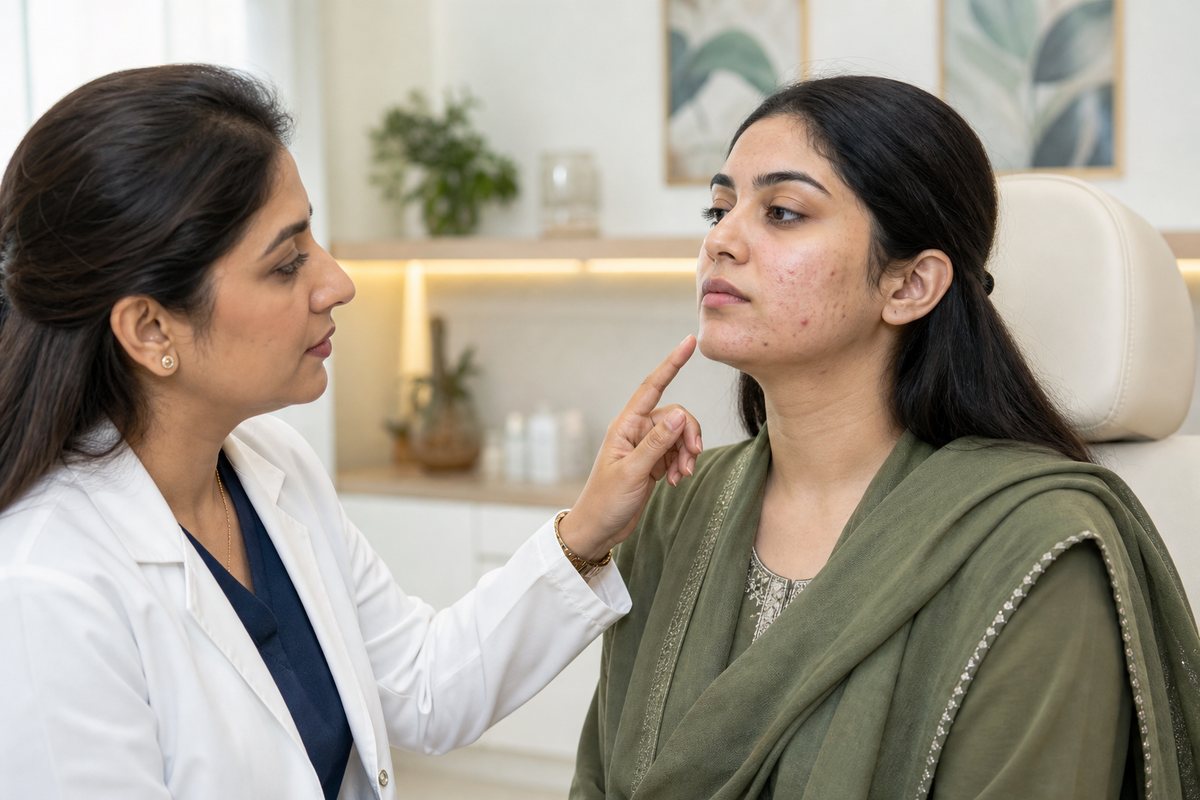
Acne treatment aims to reduce blocked pores, inflammation and new breakouts while lowering the chance of permanent marks or scars. The plan depends on acne type, severity, skin sensitivity, previous treatment and relevant medical factors.
Treatment explained
Acne is an inflammatory disorder of the pilosebaceous unit—the hair follicle and its oil gland. Comedones, inflamed spots, deeper nodules and cysts need different combinations of skin care, topical or oral medicine and, occasionally, office procedures.
Problems and conditions
Possible suitability
Safety screening
This list is not exhaustive. The treating clinician must confirm contraindications and any condition-specific precautions.
Individual assessment
Assessment records the distribution and type of lesions, menstrual or hormonal clues where relevant, current products, medicines, scarring tendency and previous response. Photographs may help follow progress. Severe, sudden or scarring acne may require specialist medical management.
Step-by-step overview
A consultation commonly takes 20–40 minutes. Office procedures, when appropriate, often take 15–45 minutes. Medical treatment usually needs weeks to months rather than an immediate result.
No anaesthesia is needed for routine assessment or skin-care planning. Selected procedures may use cooling, topical numbing or local anaesthetic.
The exact technique, setting and anaesthetic plan require confirmation from the treating clinician after examination.
Downtime and healing
Prescription products can initially cause dryness or irritation.
Peels, extraction or light-based treatment may cause temporary redness or peeling.
Acne plans are usually judged over several skin cycles, not a few days.
Improvement is usually gradual. Maintenance may be required because acne can relapse, particularly when hormonal or genetic drivers remain. Dark marks often fade more slowly than active spots.
Recovery and result timing are general ranges, not guarantees. Your written instructions and review findings take priority.
Potential benefits
Informed consent
Before treatment
After treatment
Why choose Dr Husnain Aesthetic Clinic?
Care is led by Assoc. Prof. Dr Husnain Khan, MBBS, MCPS, FCPS, MRCS, plastic and cosmetic surgeon. He has more than 17 years of experience, is Head of the Department of Plastic Surgery at Holy Family Hospital, Rawalpindi, has worked in the UK NHS and is listed with GMC reference 7427786.
These credentials do not guarantee an outcome. The purpose of consultation is to decide whether treatment is reasonable for you and explain alternatives, limitations and follow-up.
Personalised quotation
A responsible quotation follows consultation because price depends on the treatment plan rather than the page name alone. Relevant factors include:
The published rate-list value is not a guaranteed final quotation. Ask what the written quotation includes and whether future sessions, tests, medicines or follow-up are separate.
Read the treatment-cost planning guide →Patient questions
Acne can often be controlled, but relapse is possible. Maintenance treatment may be needed, especially when hormonal or genetic factors continue.
Usually yes. Controlling active inflammation helps prevent new scars and makes later scar procedures safer to plan.
Diet may influence acne for some people, but acne has multiple causes. A restrictive diet should not replace clinical treatment.
Picking and squeezing can increase inflammation, infection, dark marks and scarring. Professional extraction is appropriate only for selected lesions.
Some improvement may appear within several weeks, but a fair assessment often takes around eight to twelve weeks.
Selected superficial peels can support some acne plans, but peel type and timing depend on skin condition and other medicines.
Inflammation can stimulate excess pigment, particularly in darker skin tones. These marks are not the same as permanent textural scars.
Seek prompt review for sudden severe acne, widespread painful nodules, fever, significant distress or rapid scarring.
Independent patient information
These external resources support further reading. They do not replace advice from the clinician responsible for your care.
Request a private appointment in Rawalpindi. Patients from Islamabad, elsewhere in Pakistan and overseas can ask what information is needed before travelling.
General patient information · Last reviewed 21 September 2026 · This page does not replace an examination, diagnosis or informed-consent discussion.