Procedure duration
Surgery commonly takes 1–3 hours depending on liposuction, gland excision and skin removal.
Male chest reduction
Reduce excess male breast tissue and create a flatter, more defined chest contour.
Clear overview
Gynecomastia describes enlargement of male breast tissue. Chest fullness may contain gland, fat, loose skin or a combination, and treatment depends on identifying which component is present.
Problems and conditions
Possible suitability
Safety screening
This list is not exhaustive. Suitability and contraindications require confirmation by the treating clinician.
Individual decision-making
Consultation reviews onset, medicines, general health, weight stability and examination findings. New, painful or one-sided enlargement may need medical investigation before cosmetic surgery is considered.
Step-by-step overview
The exact technique, anaesthesia and setting depend on your examination and agreed treatment plan. A typical procedure may include:
Surgery commonly takes 1–3 hours depending on liposuction, gland excision and skin removal.
General anaesthesia or local anaesthetic with sedation may be used according to extent.
This overview is educational, not a personalised operative plan. Your consultation and consent discussion will explain the technique proposed for you.
After your procedure
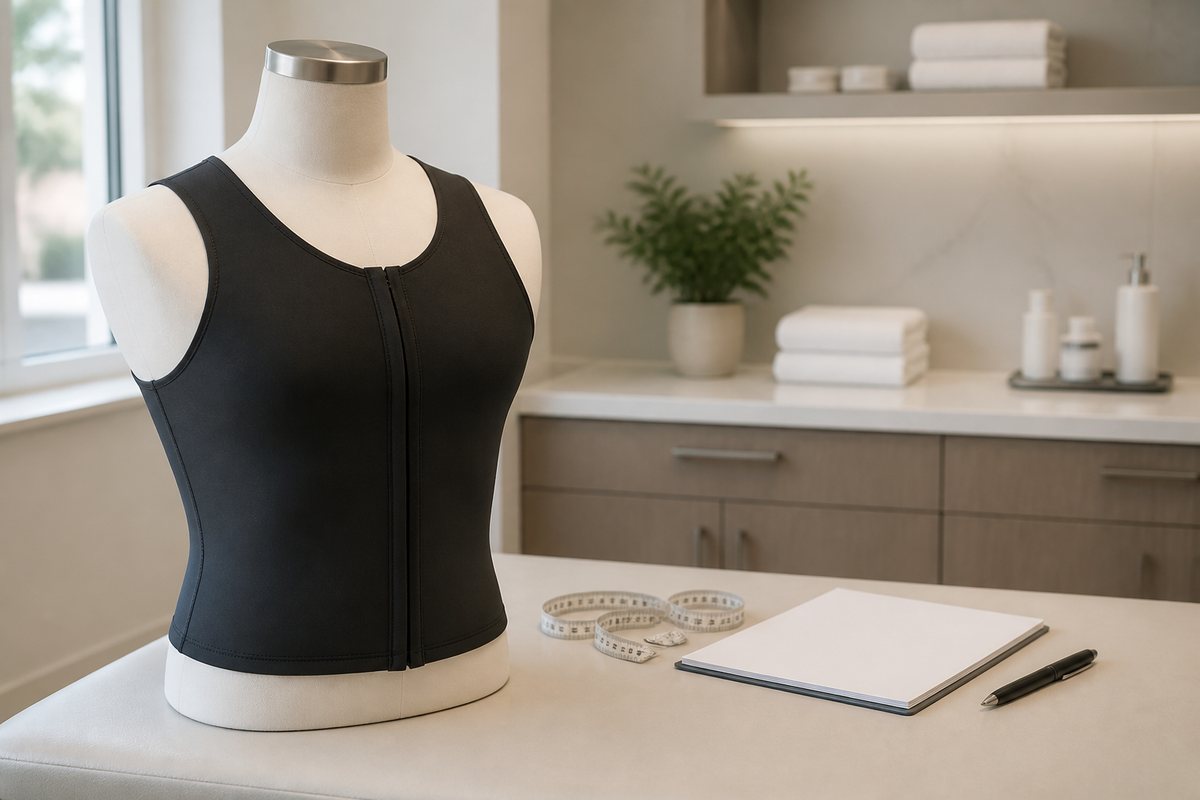
A compression garment may be recommended. Swelling, bruising and temporary firmness are common. Work, lifting and chest exercise restart gradually according to the procedure and healing.
The range depends on liposuction, gland excision and job demands.
More extensive correction may require a longer restriction.
Swelling and firmness reduce while scars mature.
These are general planning ranges, not a personal clearance date. Recovery differs between patients, and your written instructions and Dr Husnain’s advice take priority over general information online.
Result development
Chest contour becomes clearer over three to six months. Weight, hormones and medicines can affect remaining tissue.
Potential benefits
Informed consent
Every procedure has limitations and possible complications. Relevant considerations include:
Before treatment
After treatment
Why choose Dr Husnain Aesthetic Clinic?
Care is led by Assoc. Prof. Dr Husnain Khan, MBBS, MCPS, FCPS, MRCS. He has more than 17 years of experience as a plastic surgeon, is Head of the Department of Plastic Surgery at Holy Family Hospital, Rawalpindi, has worked in the UK NHS and is listed with GMC reference 7427786.
Credentials do not guarantee an outcome. Consultation is used to explain realistic options, limitations, recovery and follow-up.
Personalised quotation
Price depends on the individual treatment plan. Factors may include:
The published rate-list value is not a guaranteed final quotation. Ask what is included in writing and whether tests, medicines, facility costs or follow-up are separate.
Read the treatment-cost planning guide →Direct answers
No. Firm glandular tissue often requires excision, while liposuction addresses fat. Some patients need both.
Sometimes. Recent, painful, one-sided or otherwise unusual enlargement should be assessed for an underlying cause.
Exercise can reduce body fat but cannot reliably remove firm glandular tissue.
Common scars sit partly around the areola; skin-removal cases require longer scars.
Over-resection, scar or uneven tissue can cause a crater deformity.
Recurrence is possible if hormone, medicine, substance or weight drivers continue.
Many patients use it for several weeks, but the surgeon sets the schedule.
Upper-body training commonly waits four to eight weeks, depending on operation and healing.
Independent patient information
These external resources support further reading. They do not replace advice from the clinician responsible for your care.
Book a private consultation in Satellite Town, Rawalpindi for individual assessment, alternatives, costs, recovery and aftercare guidance. We welcome patients from Rawalpindi, Islamabad and surrounding areas.
General patient information · Last reviewed 12 September 2026 · This page does not replace a medical consultation.