
Treatment duration
A detailed first consultation commonly takes 30–60 minutes. Tests or follow-up may be needed before a diagnosis or transplant plan is complete.
Diagnosis before treatment
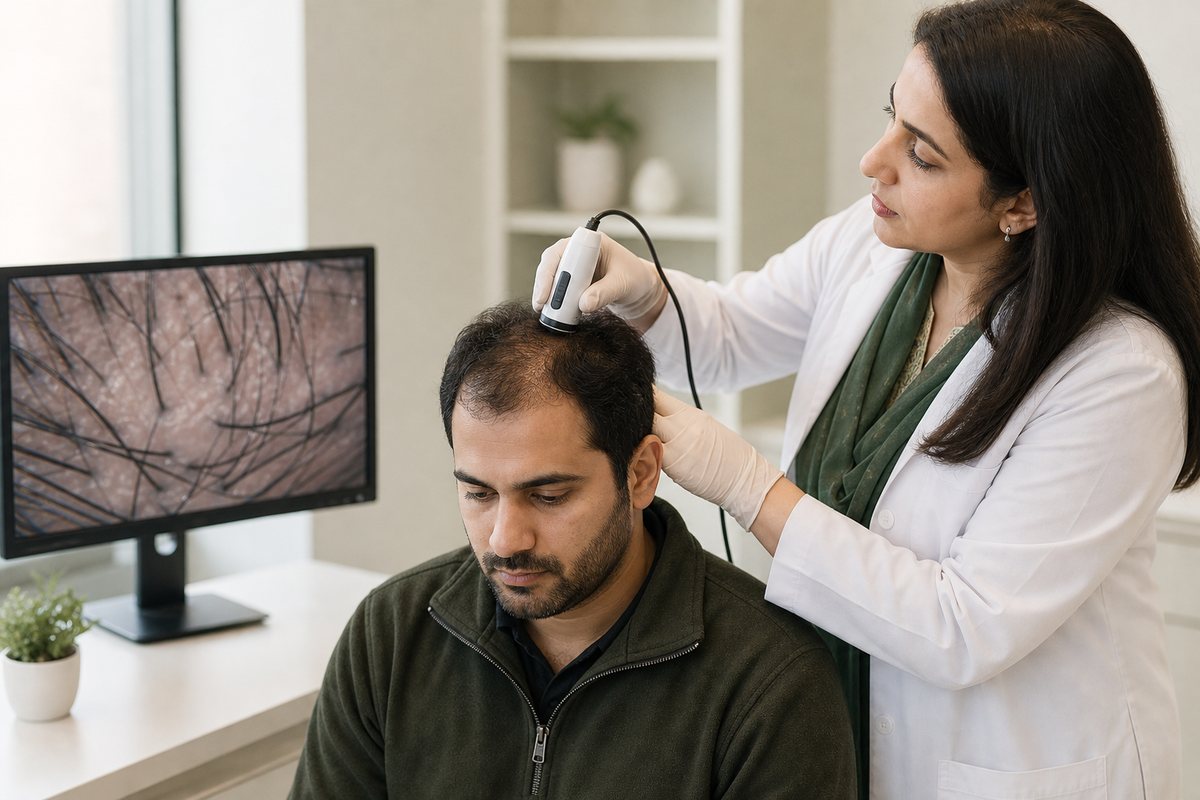
Hair loss is a symptom with several possible causes. A useful consultation distinguishes patterned loss from shedding, breakage, inflammation and scarring disease before discussing medicine, injections or transplantation.
Treatment explained
Assessment combines history, scalp examination and, when indicated, magnified evaluation or laboratory investigation. The goal is to identify active disease, likely progression, donor capacity and which treatments have reasonable evidence.
Problems and conditions
Possible suitability
Safety screening
This list is not exhaustive. The treating clinician must confirm contraindications and any condition-specific precautions.
Individual assessment
The clinician records onset, pattern, family history, shedding, illness, childbirth, weight change, medicines, nutrition, hair practices and scalp symptoms. Hair calibre, miniaturisation, donor density and signs of inflammation are examined.
Step-by-step overview
A detailed first consultation commonly takes 30–60 minutes. Tests or follow-up may be needed before a diagnosis or transplant plan is complete.
No anaesthesia is required for routine scalp assessment. A biopsy, if medically indicated, uses local anaesthetic.
The exact technique, setting and anaesthetic plan require confirmation from the treating clinician after examination.
Downtime and healing
Routine activity continues.
Hair-cycle response cannot be judged in a few weeks.
Surgery waits until diagnosis, donor and progression are understood.
The consultation provides a working diagnosis and plan rather than an instant cosmetic result. Hair-growth treatments need months and may require ongoing use to maintain benefit.
Recovery and result timing are general ranges, not guarantees. Your written instructions and review findings take priority.
Potential benefits
Informed consent
Before treatment
After treatment
Why choose Dr Husnain Aesthetic Clinic?
Care is led by Assoc. Prof. Dr Husnain Khan, MBBS, MCPS, FCPS, MRCS, plastic and cosmetic surgeon. He has more than 17 years of experience, is Head of the Department of Plastic Surgery at Holy Family Hospital, Rawalpindi, has worked in the UK NHS and is listed with GMC reference 7427786.
These credentials do not guarantee an outcome. The purpose of consultation is to decide whether treatment is reasonable for you and explain alternatives, limitations and follow-up.
Personalised quotation
A responsible quotation follows consultation because price depends on the treatment plan rather than the page name alone. Relevant factors include:
The published rate-list value is not a guaranteed final quotation. Ask what the written quotation includes and whether future sessions, tests, medicines or follow-up are separate.
Read the treatment-cost planning guide →Patient questions
Not everyone does. Tests are selected when history or examination suggests anaemia, thyroid, nutritional, hormonal or other medical factors.
Physical or emotional stress can contribute to diffuse shedding, but patterned or inflammatory loss may coexist.
No. Some shedding is reversible, while patterned and scarring conditions behave differently.
Usually when the diagnosis is clear, donor hair is adequate and future loss can be planned realistically.
Supplements help documented deficiency; taking more than needed does not reliably treat genetic hair loss and can sometimes be harmful.
Pain, burning, scale, pustules, loss of follicular openings or smooth shiny patches need specialist review.
Hair cycles are slow. Many treatments need three to six months before a fair assessment.
Yes. Female pattern hair loss is common, but diffuse shedding and medical contributors should also be considered.
Independent patient information
These external resources support further reading. They do not replace advice from the clinician responsible for your care.
Request a private appointment in Rawalpindi. Patients from Islamabad, elsewhere in Pakistan and overseas can ask what information is needed before travelling.
General patient information · Last reviewed 21 September 2026 · This page does not replace an examination, diagnosis or informed-consent discussion.