Treatment duration
Upper or lower eyelid surgery often takes 45–120 minutes; combined or complex procedures take longer.
Upper and lower eyelid assessment
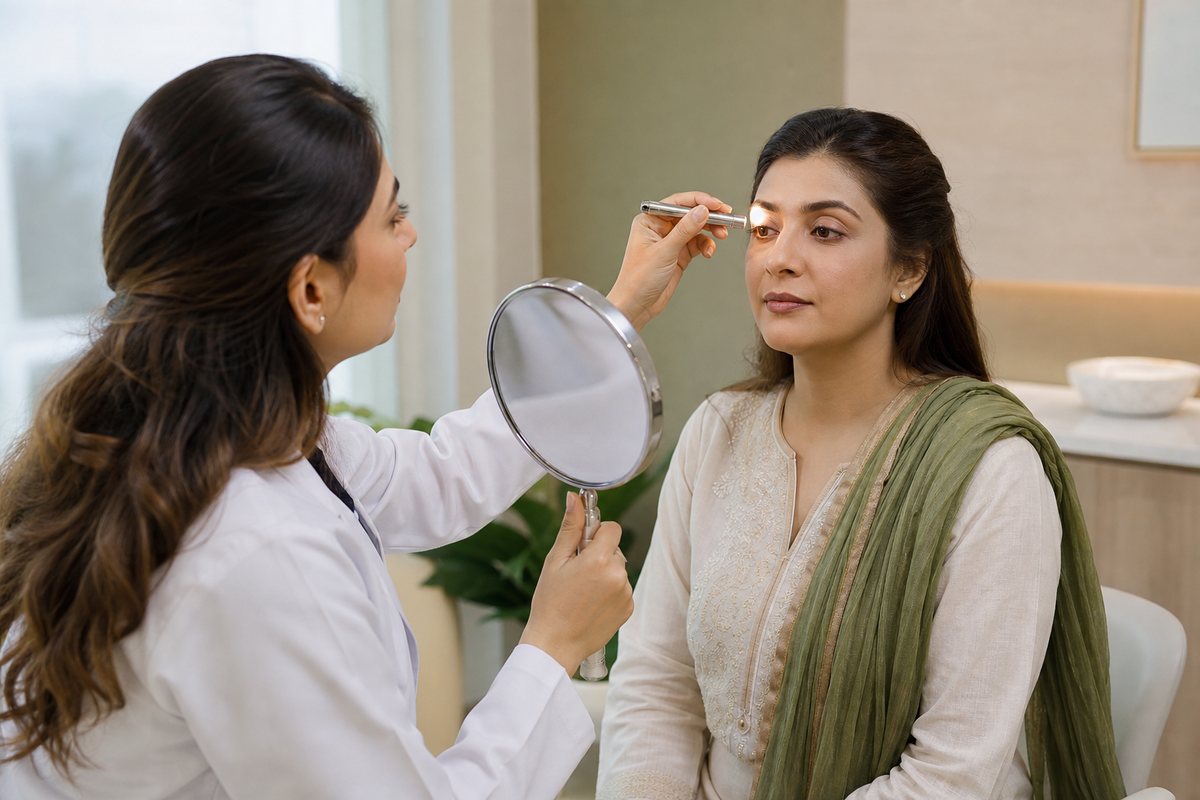
Blepharoplasty removes or repositions selected eyelid skin and fat. Planning must protect eyelid closure, tear-film health and vision while distinguishing true eyelid changes from brow descent or cheek volume loss.
Treatment explained
Upper eyelid surgery commonly uses an incision in the natural crease. Lower eyelid access may be through the skin beneath the lashes or inside the eyelid, depending on skin excess and fat position.
Problems and conditions
Possible suitability
Safety screening
This list is not exhaustive. The treating clinician must confirm contraindications and any condition-specific precautions.
Individual assessment
Assessment checks brow position, eyelid skin and fat, lower-lid tone, eye prominence, closure, dryness, vision history, contact lenses, medicines and previous eye surgery. Eye-specialist input may be required.
Step-by-step overview
Upper or lower eyelid surgery often takes 45–120 minutes; combined or complex procedures take longer.
Local anaesthetic with or without sedation may suit selected cases. General anaesthesia may be chosen for combined or lower-eyelid surgery.
The exact technique, setting and anaesthetic plan require confirmation from the treating clinician after examination.
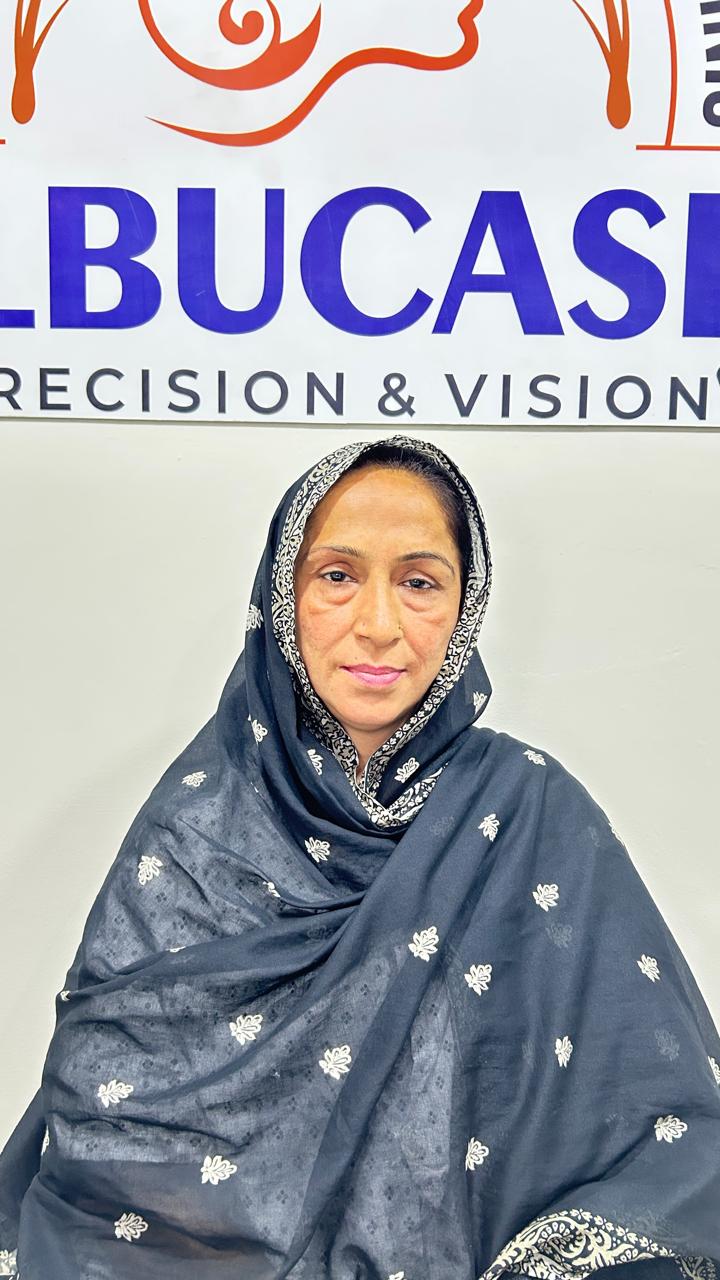
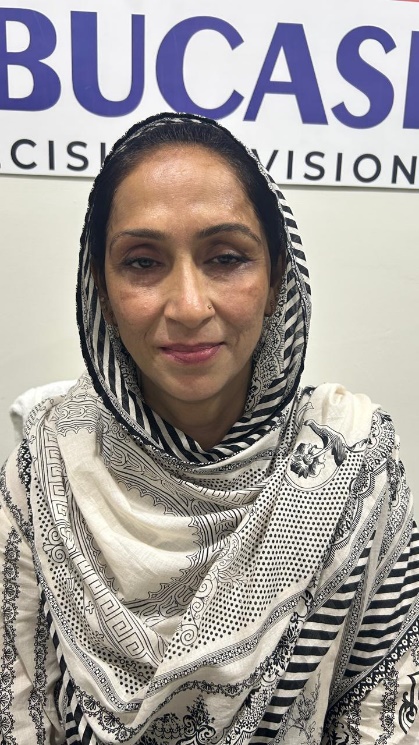
Consented clinical photographs
Published with patient or guardian consent. Anatomy, treatment plans, healing and outcomes differ between patients; these photographs do not promise or guarantee a result.
Downtime and healing
Bruising and swelling commonly remain visible.
Avoid bending and heavy activity until cleared.
Fine scars and residual swelling continue settling.
The eyelid contour becomes clearer as swelling resolves. Surgery does not stop ageing or reliably remove pigment, tear troughs or every lower-eye line.
Recovery and result timing are general ranges, not guarantees. Your written instructions and review findings take priority.
Potential benefits
Informed consent
Before treatment
After treatment
Why choose Dr Husnain Aesthetic Clinic?
Care is led by Assoc. Prof. Dr Husnain Khan, MBBS, MCPS, FCPS, MRCS. He has more than 17 years of experience as a plastic surgeon, is Head of the Department of Plastic Surgery at Holy Family Hospital, Rawalpindi, has worked in the UK NHS and is listed with GMC reference 7427786.
These credentials do not guarantee an outcome. The purpose of consultation is to decide whether treatment is reasonable for you and explain alternatives, limitations and follow-up.
Clinic-supplied procedure rates
These are the clinic-supplied rate-list values. Confirm the current rate and exactly what it includes before booking. Your final written quotation may differ according to the assessed procedure scope, facility, anaesthesia, tests, medicines and follow-up.
View the complete procedure price list →Personalised quotation
A responsible quotation follows consultation because price depends on the treatment plan rather than the page name alone. Relevant factors include:
The published rate-list value is not a guaranteed final quotation. Ask what the written quotation includes and whether future sessions, tests, medicines or follow-up are separate.
Read the treatment-cost planning guide →Patient questions
It may improve shadow from fat prominence, but pigment, thin skin and tear-trough anatomy can remain.
Upper skin that obstructs the visual field can have a functional effect, but formal assessment may be needed.
Upper scars usually sit in the crease; lower access may be beneath lashes or inside the eyelid. Scars remain but usually mature.
Selected upper procedures can use local anaesthetic with or without sedation; other plans may use general anaesthesia.
Visible bruising often improves over one to two weeks but varies between patients.
Ageing continues and remaining tissues can change. No result is permanent in the sense of stopping ageing.
It accesses lower-lid fat from inside the eyelid and does not remove external skin by itself.
Severe pain, sudden tense swelling, reduced vision or double vision after eyelid surgery needs urgent assessment.
Independent patient information
These external resources support further reading. They do not replace advice from the clinician responsible for your care.
Request a private appointment in Rawalpindi. Patients from Islamabad, elsewhere in Pakistan and overseas can ask what information is needed before travelling.
General patient information · Last reviewed 12 September 2026 · This page does not replace an examination, diagnosis or informed-consent discussion.