Treatment duration
A session commonly takes 45–90 minutes including blood collection, processing and treatment.
Autologous platelet preparation
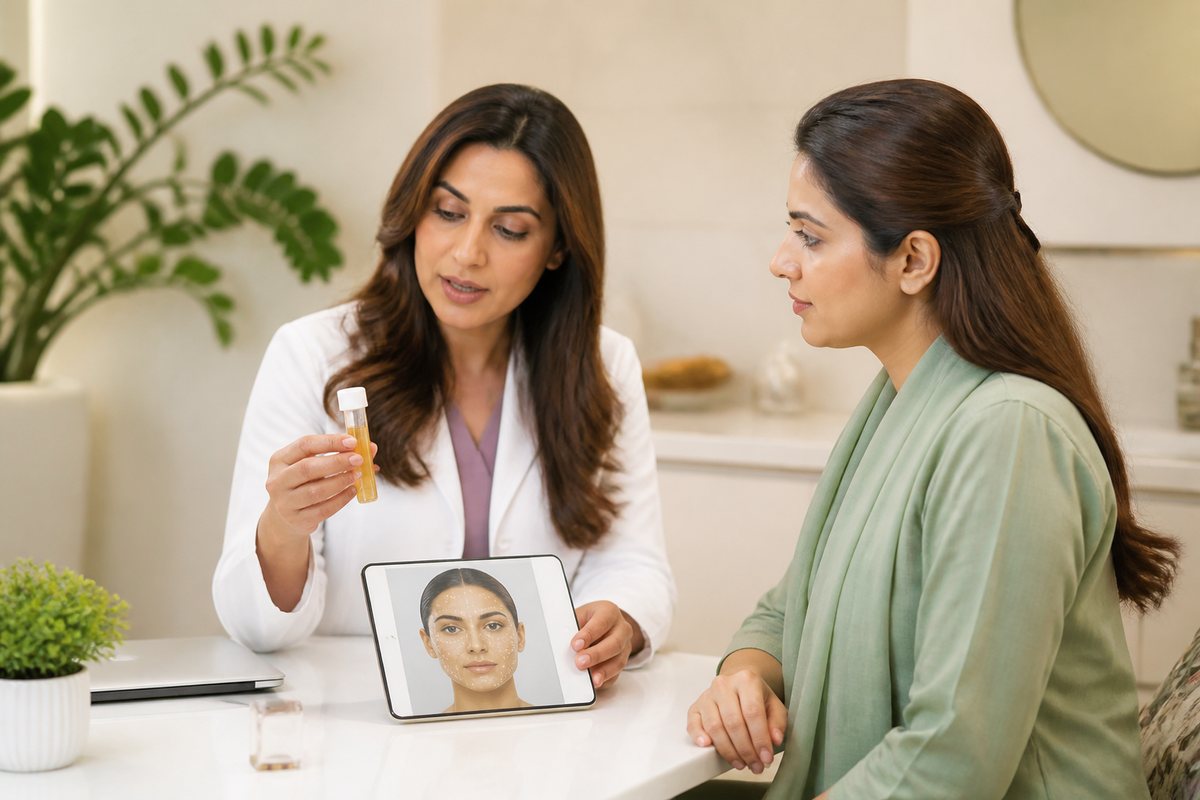
Platelet-rich plasma is prepared from a patient’s own blood and then injected or applied with another procedure. Evidence suggests potential benefit for selected indications, but preparation systems and study results vary and it should not be marketed as a guaranteed regeneration treatment.
Treatment explained
A blood sample is centrifuged to concentrate platelets in plasma. The preparation may be injected into selected tissue or used with microneedling. PRP is different from stem cells, exosomes and unregulated “growth factor” products.
Problems and conditions
Possible suitability
Safety screening
This list is not exhaustive. The treating clinician must confirm contraindications and any condition-specific precautions.
Individual assessment
Assessment reviews the concern, medicines, blood or platelet problems, anaemia, infection, pregnancy and whether PRP adds enough value to the base procedure. The preparation system and handling should be explained.
Step-by-step overview
A session commonly takes 45–90 minutes including blood collection, processing and treatment.
Topical anaesthetic or local anaesthetic may be used for injections or microneedling.
The exact technique, setting and anaesthetic plan require confirmation from the treating clinician after examination.
Downtime and healing
Injection points or microneedling redness are common.
This can occur at blood-draw and treatment sites.
Any collagen-related effect is gradual and variable.
Evidence and results vary by indication and protocol. A course may be proposed, but PRP cannot guarantee younger skin, scar removal or permanent improvement.
Recovery and result timing are general ranges, not guarantees. Your written instructions and review findings take priority.
Potential benefits
Informed consent
Before treatment
After treatment
Why choose Dr Husnain Aesthetic Clinic?
Care is led by Assoc. Prof. Dr Husnain Khan, MBBS, MCPS, FCPS, MRCS. He has more than 17 years of experience as a plastic surgeon, is Head of the Department of Plastic Surgery at Holy Family Hospital, Rawalpindi, has worked in the UK NHS and is listed with GMC reference 7427786.
These credentials do not guarantee an outcome. The purpose of consultation is to decide whether treatment is reasonable for you and explain alternatives, limitations and follow-up.
Clinic-supplied procedure rates
These are the clinic-supplied rate-list values. Confirm the current rate and exactly what it includes before booking. Your final written quotation may differ according to the assessed procedure scope, facility, anaesthesia, tests, medicines and follow-up.
View the complete procedure price list →Personalised quotation
A responsible quotation follows consultation because price depends on the treatment plan rather than the page name alone. Relevant factors include:
The published rate-list value is not a guaranteed final quotation. Ask what the written quotation includes and whether future sessions, tests, medicines or follow-up are separate.
Read the treatment-cost planning guide →Patient questions
No. PRP concentrates platelets from blood; it is not a stem-cell or exosome product.
PRP may support selected combination plans but does not erase scars on its own.
Protocols vary and a course may be discussed. The number depends on indication and response.
Because it is autologous, allergy to the plasma itself is less likely, but additives, antiseptics or anaesthetics can still cause reactions.
Safety depends on sterile blood handling, device use and clinical assessment; the marketing name does not establish safety.
Any change is gradual over weeks to months and may be subtle.
Patients with active infection, certain blood or platelet disorders, severe anaemia or other unsafe circumstances may not be suitable.
No. Filler provides immediate selected volume; PRP does not provide the same predictable structural augmentation.
Independent patient information
These external resources support further reading. They do not replace advice from the clinician responsible for your care.
Request a private appointment in Rawalpindi. Patients from Islamabad, elsewhere in Pakistan and overseas can ask what information is needed before travelling.
General patient information · Last reviewed 12 September 2026 · This page does not replace an examination, diagnosis or informed-consent discussion.