Treatment duration
The operation often takes 45–90 minutes.
Lower-cheek fat-pad surgery
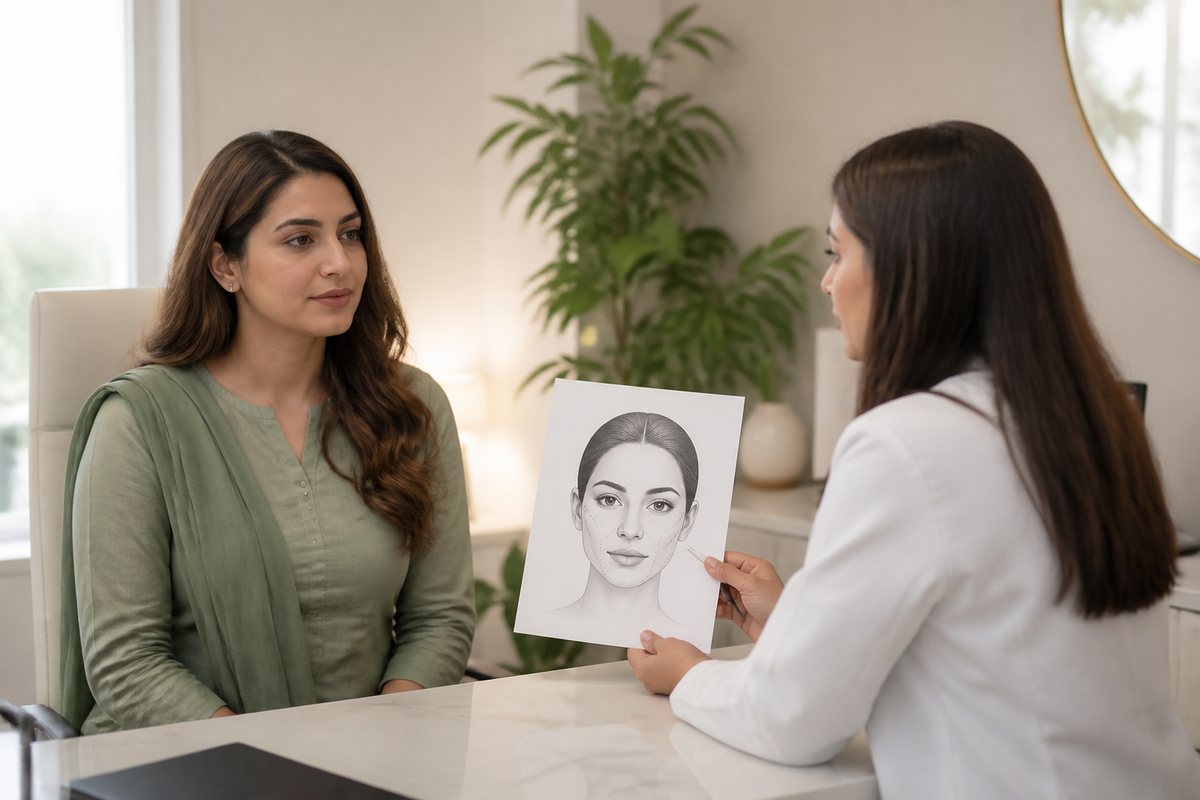
Buccal fat removal reduces a portion of the deep cheek fat pad through an incision inside the mouth. It is suitable only for selected persistent lower-cheek fullness and can create an overly hollow appearance as the face ages.
Treatment explained
The buccal fat pad sits deep in the cheek near facial nerve branches and the parotid duct. Conservative partial removal is different from facial liposuction and does not treat jaw muscle, jowls or loose skin.
Problems and conditions
Possible suitability
Safety screening
This list is not exhaustive. The treating clinician must confirm contraindications and any condition-specific precautions.
Individual assessment
Assessment distinguishes buccal fat from masseter muscle, superficial fat, bone width and jowls. Photographs from several angles and the likely effect of future volume loss are discussed.
Step-by-step overview
The operation often takes 45–90 minutes.
Local anaesthetic with sedation or general anaesthesia may be used depending on the patient and setting.
The exact technique, setting and anaesthetic plan require confirmation from the treating clinician after examination.
Downtime and healing
The cheeks may initially look fuller.
Work return depends on swelling and job demands.
Deep swelling resolves gradually.
Cheek contour changes as swelling subsides. Removed fat does not regrow in the same way, but weight and ageing change remaining facial fat; excessive removal can become more apparent later.
Recovery and result timing are general ranges, not guarantees. Your written instructions and review findings take priority.
Potential benefits
Informed consent
Before treatment
After treatment
Why choose Dr Husnain Aesthetic Clinic?
Care is led by Assoc. Prof. Dr Husnain Khan, MBBS, MCPS, FCPS, MRCS. He has more than 17 years of experience as a plastic surgeon, is Head of the Department of Plastic Surgery at Holy Family Hospital, Rawalpindi, has worked in the UK NHS and is listed with GMC reference 7427786.
These credentials do not guarantee an outcome. The purpose of consultation is to decide whether treatment is reasonable for you and explain alternatives, limitations and follow-up.
Personalised quotation
A responsible quotation follows consultation because price depends on the treatment plan rather than the page name alone. Relevant factors include:
The published rate-list value is not a guaranteed final quotation. Ask what the written quotation includes and whether future sessions, tests, medicines or follow-up are separate.
Read the treatment-cost planning guide →Patient questions
No. It targets one deep lower-cheek compartment and does not change bone, muscle, jowls or all facial fat.
Yes. Natural ageing reduces facial volume, so conservative selection is important.
The incision is usually inside the mouth, so there is no external skin scar.
The removed portion is permanent, but weight and ageing continue to change facial shape.
Buccal fat is a deep encapsulated pad; superficial facial fat is in a different anatomical plane.
Natural asymmetry exists and swelling differs; perfect symmetry cannot be guaranteed.
A soft or modified diet and mouth-care plan may be advised until the intraoral incisions heal.
Lean faces, older patients with volume loss and people whose fullness comes from another structure may be poor candidates.
Independent patient information
These external resources support further reading. They do not replace advice from the clinician responsible for your care.
Request a private appointment in Rawalpindi. Patients from Islamabad, elsewhere in Pakistan and overseas can ask what information is needed before travelling.
General patient information · Last reviewed 12 September 2026 · This page does not replace an examination, diagnosis or informed-consent discussion.