Treatment duration
Treatment usually takes 30–75 minutes including numbing, depending on the area.
Collagen induction therapy
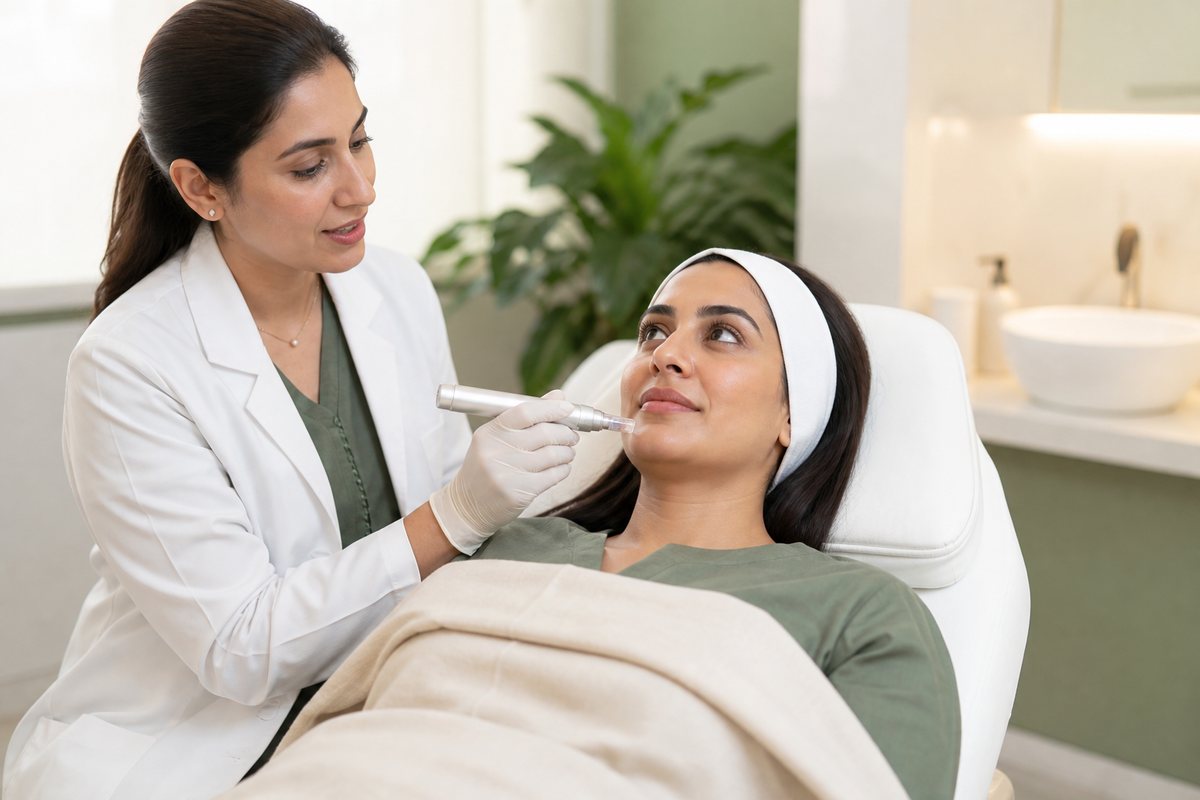
Medical microneedling uses controlled needle penetration to stimulate a wound-healing response. It may help selected acne scars, texture, fine lines and stretch marks when treatment depth and hygiene are medically appropriate.
Treatment explained
A sterile single-use needle cartridge creates many small channels at a planned depth. This differs from home rollers and from radiofrequency microneedling, which also delivers heat through insulated or non-insulated needles.
Problems and conditions
Possible suitability
Safety screening
This list is not exhaustive. The treating clinician must confirm contraindications and any condition-specific precautions.
Individual assessment
Assessment documents the concern, skin type, active disease, scar pattern, cold sores, keloid history, medicines and previous procedures. Depth and session spacing are selected by area rather than using one setting everywhere.
Step-by-step overview
Treatment usually takes 30–75 minutes including numbing, depending on the area.
Topical anaesthetic is commonly used for deeper medical microneedling. Very superficial treatment may not require it.
The exact technique, setting and anaesthetic plan require confirmation from the treating clinician after examination.
Downtime and healing
The skin can resemble mild sunburn.
Avoid picking and use only advised products.
Remodelling continues between sessions and for months.
Texture change is gradual and usually requires a series. Deep scars may need subcision, focal treatment, resurfacing or filler rather than microneedling alone.
Recovery and result timing are general ranges, not guarantees. Your written instructions and review findings take priority.
Potential benefits
Informed consent
Before treatment
After treatment
Why choose Dr Husnain Aesthetic Clinic?
Care is led by Assoc. Prof. Dr Husnain Khan, MBBS, MCPS, FCPS, MRCS. He has more than 17 years of experience as a plastic surgeon, is Head of the Department of Plastic Surgery at Holy Family Hospital, Rawalpindi, has worked in the UK NHS and is listed with GMC reference 7427786.
These credentials do not guarantee an outcome. The purpose of consultation is to decide whether treatment is reasonable for you and explain alternatives, limitations and follow-up.
Clinic-supplied procedure rates
These are the clinic-supplied rate-list values. Confirm the current rate and exactly what it includes before booking. Your final written quotation may differ according to the assessed procedure scope, facility, anaesthesia, tests, medicines and follow-up.
View the complete procedure price list →Personalised quotation
A responsible quotation follows consultation because price depends on the treatment plan rather than the page name alone. Relevant factors include:
The published rate-list value is not a guaranteed final quotation. Ask what the written quotation includes and whether future sessions, tests, medicines or follow-up are separate.
Read the treatment-cost planning guide →Patient questions
It can improve selected depressed scars, but scar type determines whether another or combined technique is needed.
A series is common. The number and spacing depend on the concern, depth, response and downtime.
Topical numbing reduces discomfort, but pressure, vibration and pinprick sensations can still be felt.
Home devices cannot reproduce medical sterility, depth control or assessment and may cause infection, pigment change or scarring.
PRP may be discussed for selected indications, but evidence and benefit vary. It requires blood collection and sterile preparation.
Follow the written protocol; gentle cleansing is usually introduced after the initial interval specified by the clinician.
Inflammation can trigger darkening, particularly after excessive treatment or sun exposure.
Early swelling can temporarily smooth skin, while true collagen-related change develops over weeks to months.
Independent patient information
These external resources support further reading. They do not replace advice from the clinician responsible for your care.
Request a private appointment in Rawalpindi. Patients from Islamabad, elsewhere in Pakistan and overseas can ask what information is needed before travelling.
General patient information · Last reviewed 12 September 2026 · This page does not replace an examination, diagnosis or informed-consent discussion.