Surface treatments
Hydradermabrasion-style facials, microdermabrasion and superficial peels mainly target the outer skin layers and generally have shorter downtime.
Texture, tone and ageing
Rejuvenation can mean hydration, exfoliation, collagen stimulation, pigment control or volume restoration. Matching the method to the concern is more useful than choosing a treatment by trend alone.
Patient information
Hydradermabrasion-style facials, microdermabrasion and superficial peels mainly target the outer skin layers and generally have shorter downtime.
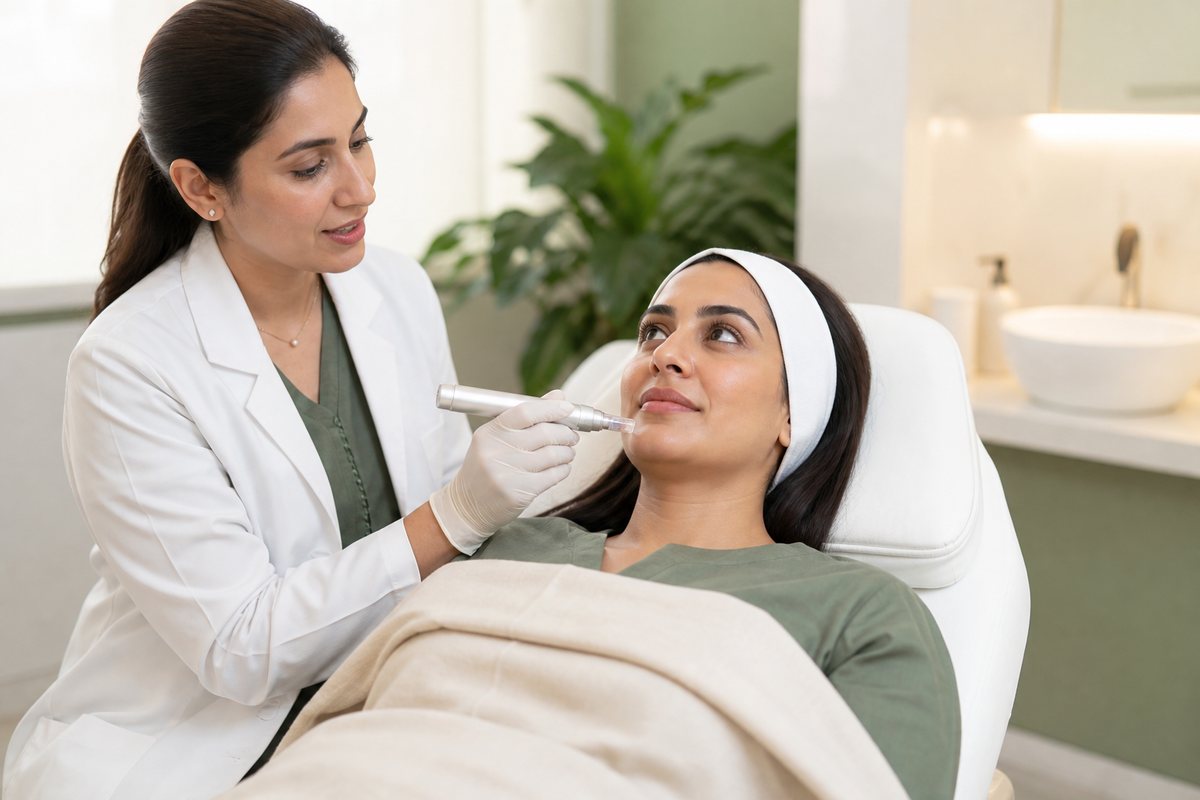
Microneedling, radiofrequency microneedling and selected resurfacing methods intentionally create controlled injury. They require more careful assessment, aftercare and sun protection.
Texture and collagen-related changes usually develop over a course of treatment and continue after the visible redness has settled. Maintenance needs vary.
Treatment availability and suitability are confirmed by the clinic after assessment. These guides are educational and do not replace individual medical advice.
Explore dedicated guides
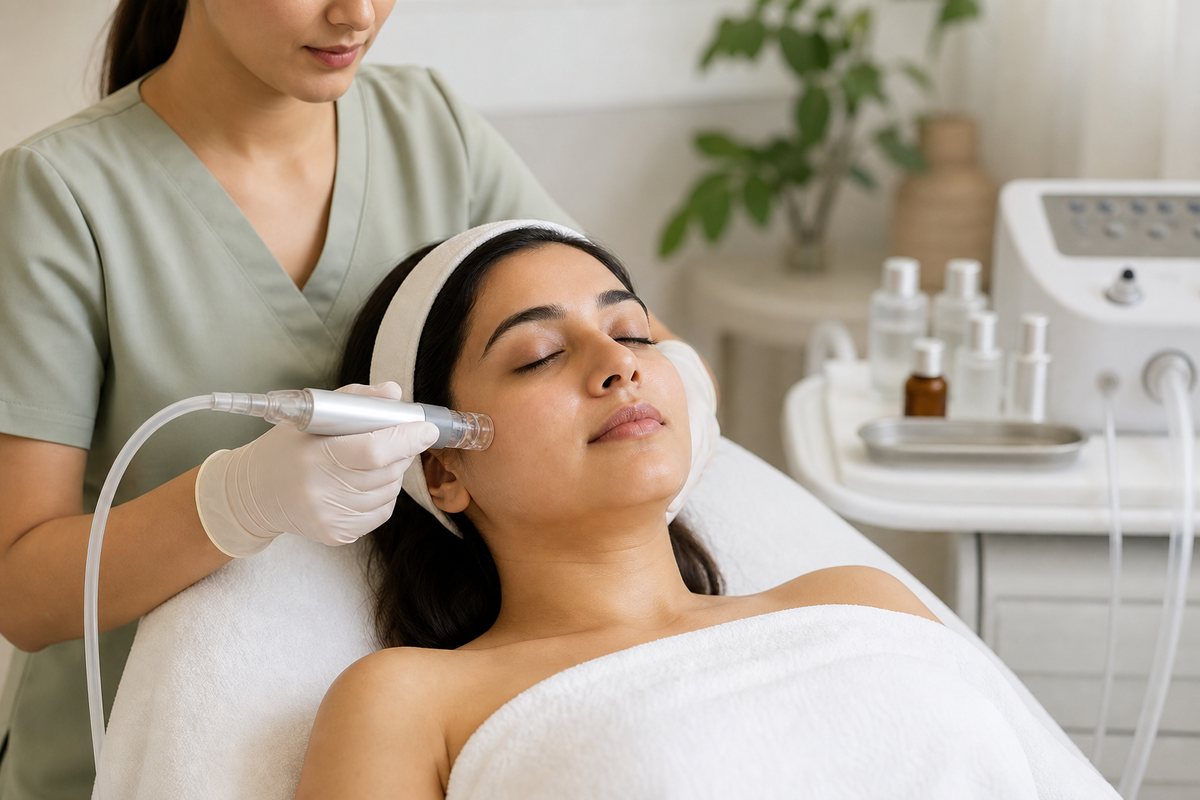
Hydradermabrasion-style facials combine surface cleansing, controlled exfoliation, suction and topical hydration. They may temporarily improve smoothness and brightness but do not replace treatment for active skin disease or deep scars.
Read patient guide →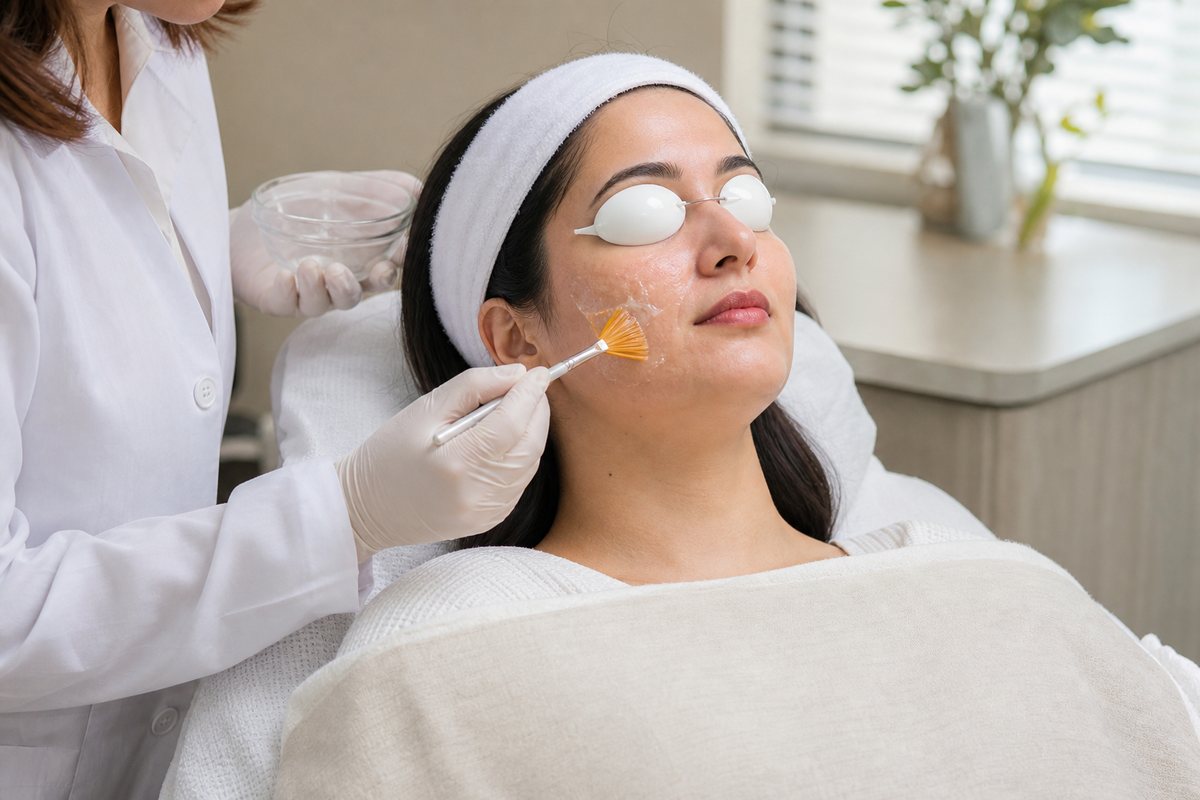
A chemical peel applies a selected solution to create controlled exfoliation at a planned depth. Peel strength must match the diagnosis, skin type, previous treatment and acceptable downtime.
Read patient guide →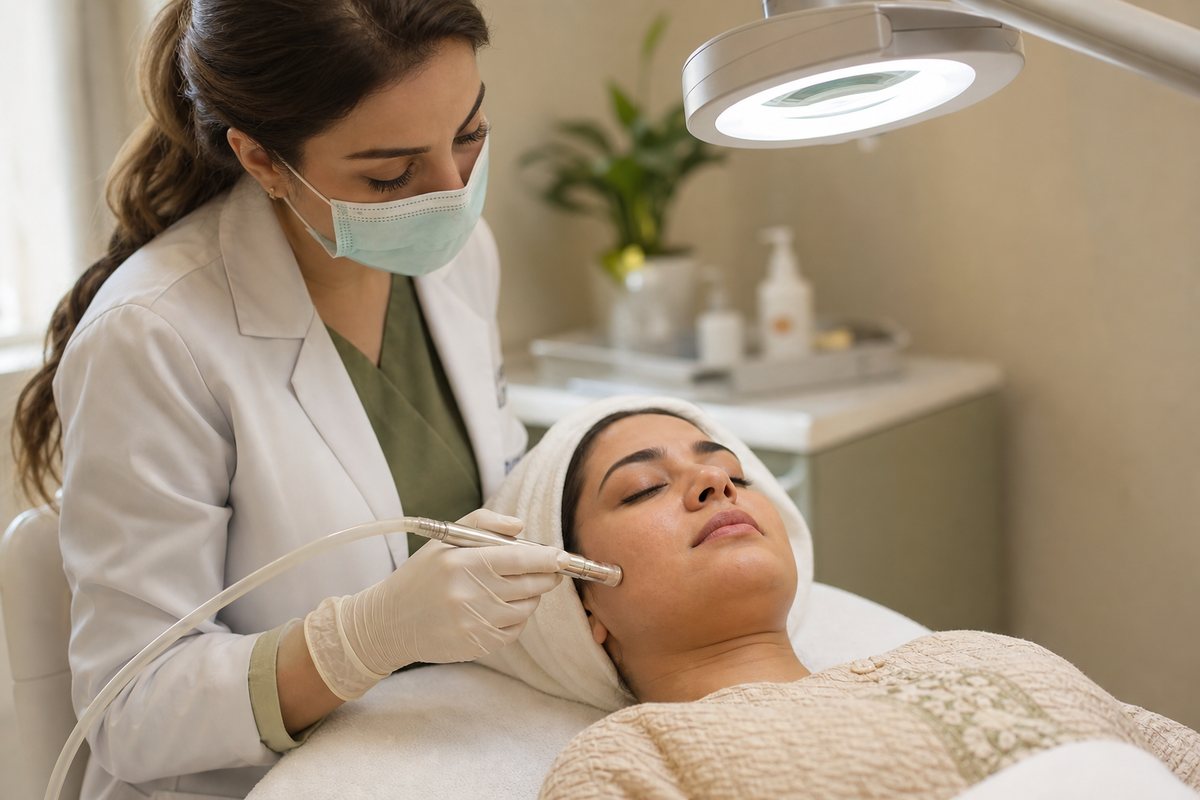
Microdermabrasion mechanically exfoliates the outermost skin surface using a diamond tip or fine crystals with suction. It may improve temporary smoothness and brightness but does not treat deep scars or significant laxity.
Read patient guide →Medical microneedling uses controlled needle penetration to stimulate a wound-healing response. It may help selected acne scars, texture, fine lines and stretch marks when treatment depth and hygiene are medically appropriate.
Read patient guide →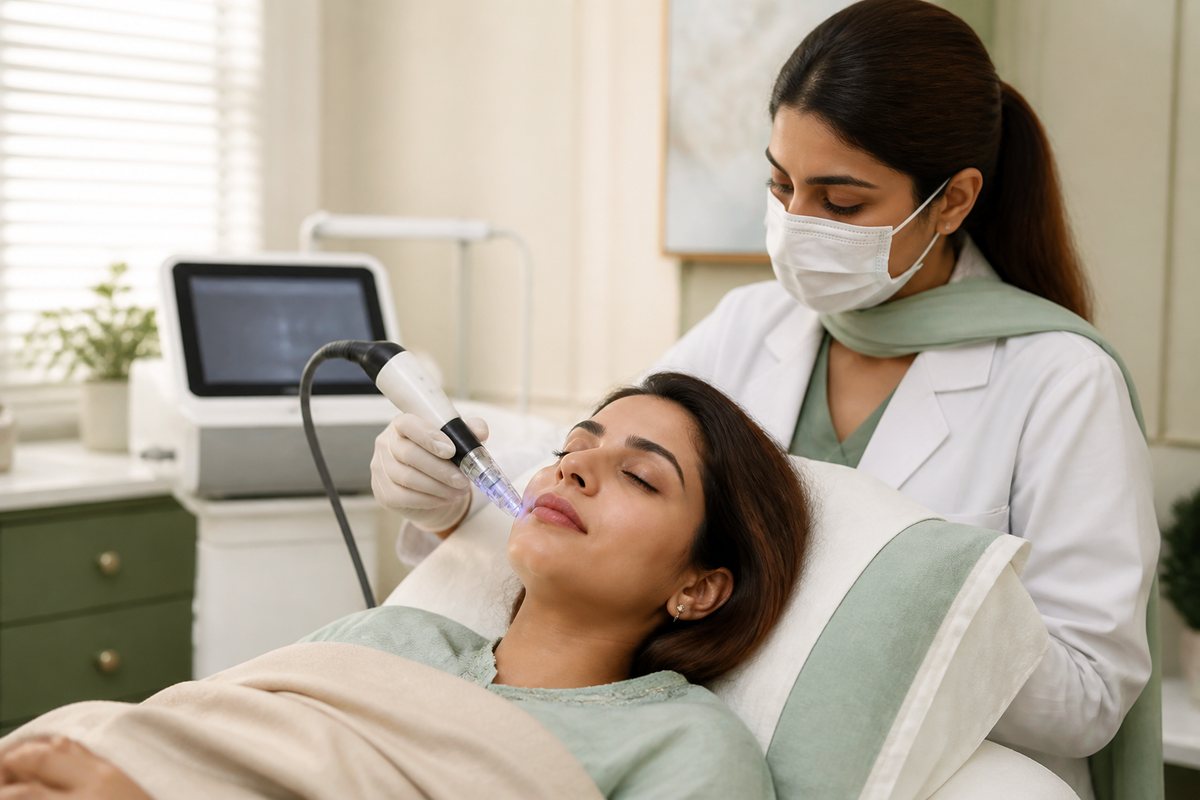
Radiofrequency microneedling places fine needles at a controlled depth and delivers heat within tissue. It may be considered for selected acne scars, texture or mild laxity, but device type and settings must be matched to skin and anatomy.
Read patient guide →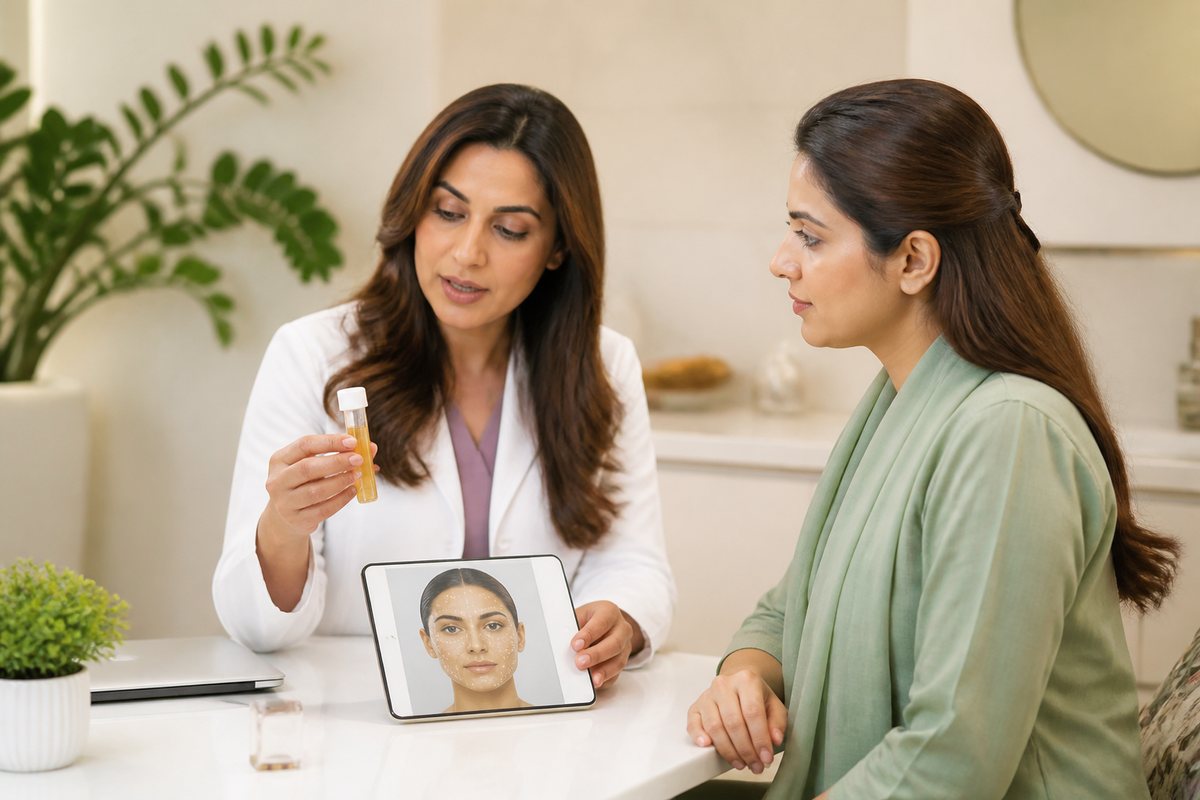
Platelet-rich plasma is prepared from a patient’s own blood and then injected or applied with another procedure. Evidence suggests potential benefit for selected indications, but preparation systems and study results vary and it should not be marketed as a guaranteed regeneration treatment.
Read patient guide →Independent patient information
These external resources support further reading. They do not replace advice from the clinician responsible for your care.
Why choose Dr Husnain Aesthetic Clinic?
Care is led by Assoc. Prof. Dr Husnain Khan, MBBS, MCPS, FCPS, MRCS. He has more than 17 years of experience in plastic surgery, serves as Head of the Department of Plastic Surgery at Holy Family Hospital, Rawalpindi, and has worked in the UK NHS. His GMC reference is 7427786.
No page can decide your suitability or promise a result. Consultation is used to explain reasonable options, limitations, recovery and costs.