Acne and acne scars are different problems
Active breakouts are controlled before aggressive scar procedures. Scar type—ice-pick, rolling, boxcar or raised—then guides whether resurfacing, microneedling, subcision or another option is discussed.
Condition-led care
A condition-led assessment helps separate active disease from residual marks or cosmetic texture concerns. This matters because the safest treatment for one problem can aggravate another.
Patient information
Active breakouts are controlled before aggressive scar procedures. Scar type—ice-pick, rolling, boxcar or raised—then guides whether resurfacing, microneedling, subcision or another option is discussed.
Melasma, post-inflammatory pigmentation, freckles and other dark marks do not respond identically. Sun and visible-light protection are central to many plans.
A new, changing, bleeding or repeatedly crusting lesion should be medically assessed rather than treated as a routine cosmetic mole or pigment spot.
Treatment availability and suitability are confirmed by the clinic after assessment. These guides are educational and do not replace individual medical advice.
Explore dedicated guides
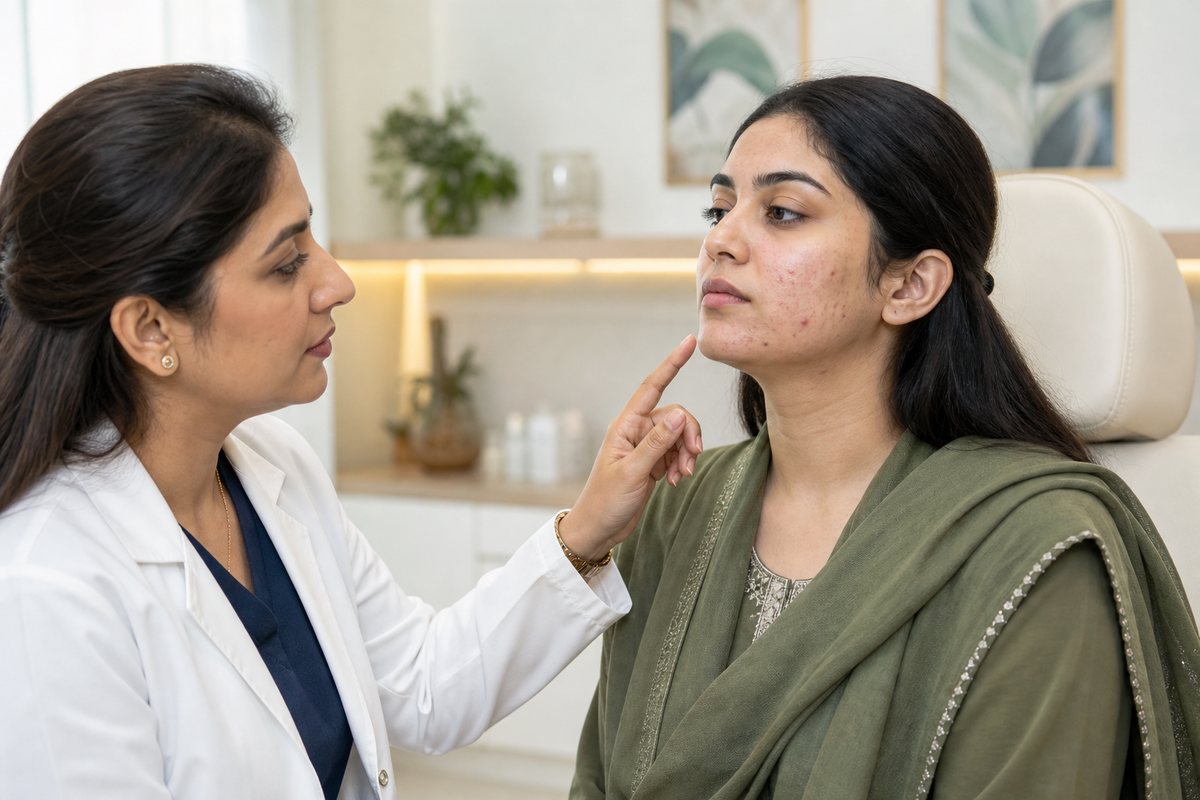
Acne treatment aims to reduce blocked pores, inflammation and new breakouts while lowering the chance of permanent marks or scars. The plan depends on acne type, severity, skin sensitivity, previous treatment and relevant medical factors.
Read patient guide →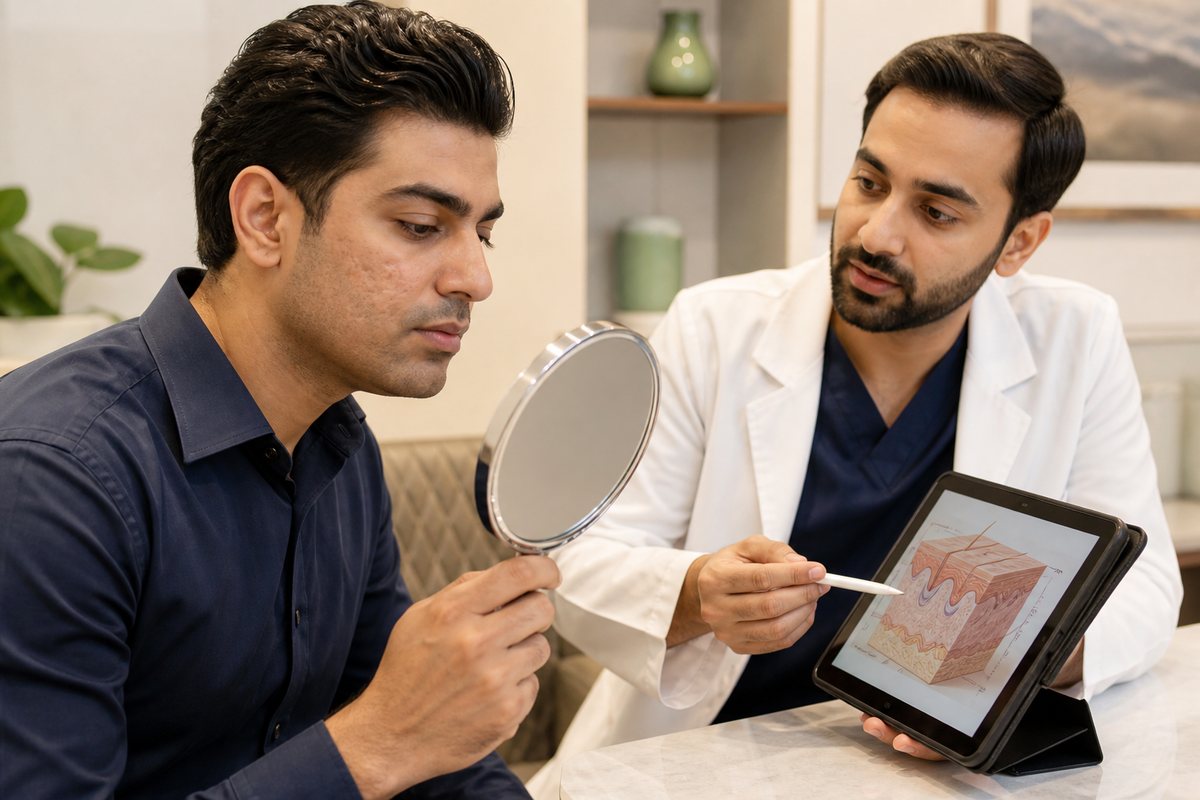
Acne scars are treated according to scar shape, depth, tethering, colour and skin type. Most patients have more than one scar pattern, so a staged combination plan may be more appropriate than one device for the whole face.
Read patient guide →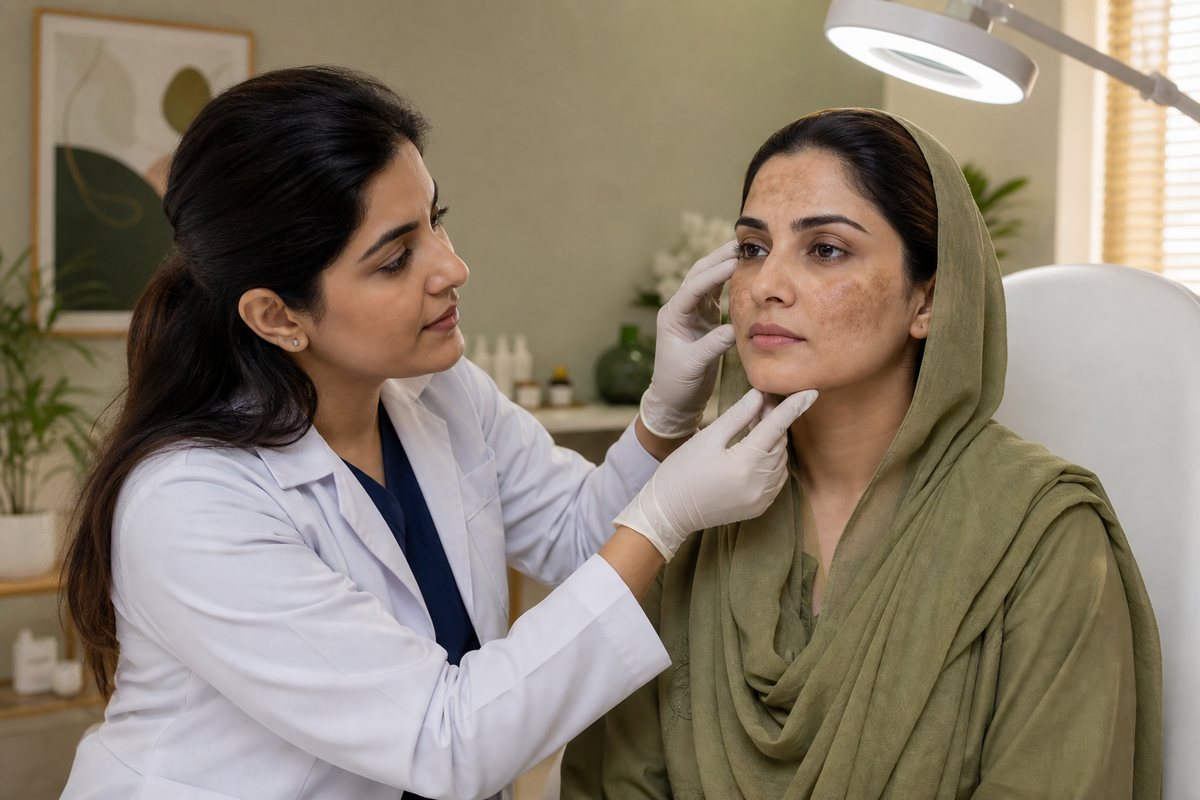
Melasma causes symmetrical brown or grey-brown facial patches and often behaves as a chronic, relapsing pigment condition. Management focuses on identifying triggers, strict light protection and a gradual plan that avoids excessive inflammation.
Read patient guide →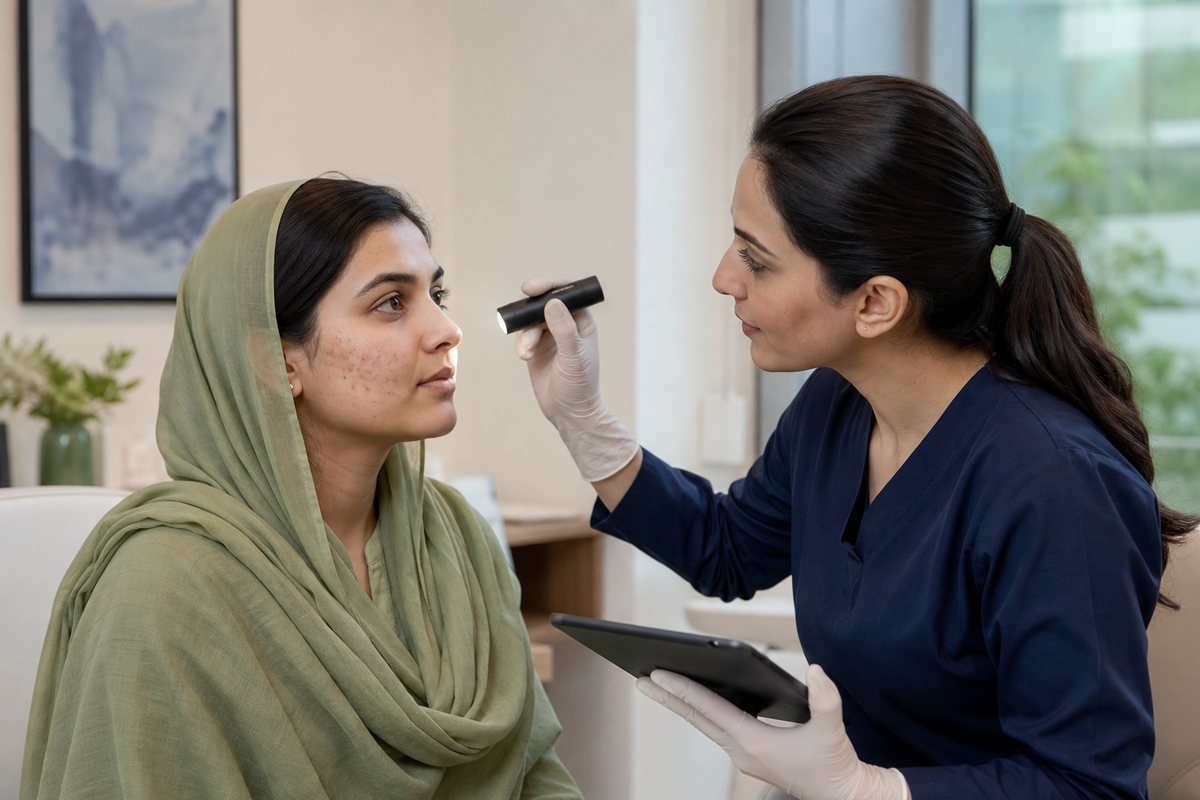
Hyperpigmentation is a description, not one diagnosis. Dark marks can follow acne, eczema, friction or injury, while freckles, sun spots and melasma have different patterns and treatment responses.
Read patient guide →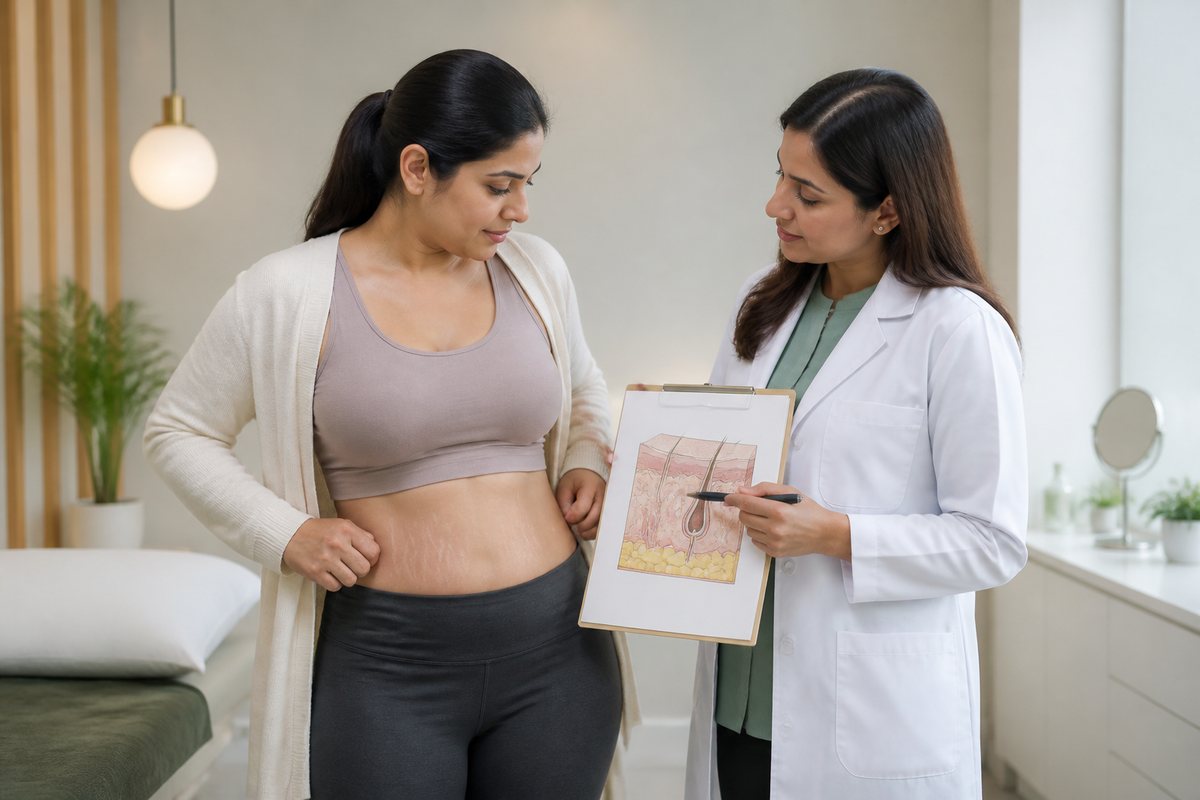
Stretch marks are dermal scars caused by rapid stretching and hormonal influences. Treatment may soften colour or texture, but complete removal is uncommon.
Read patient guide →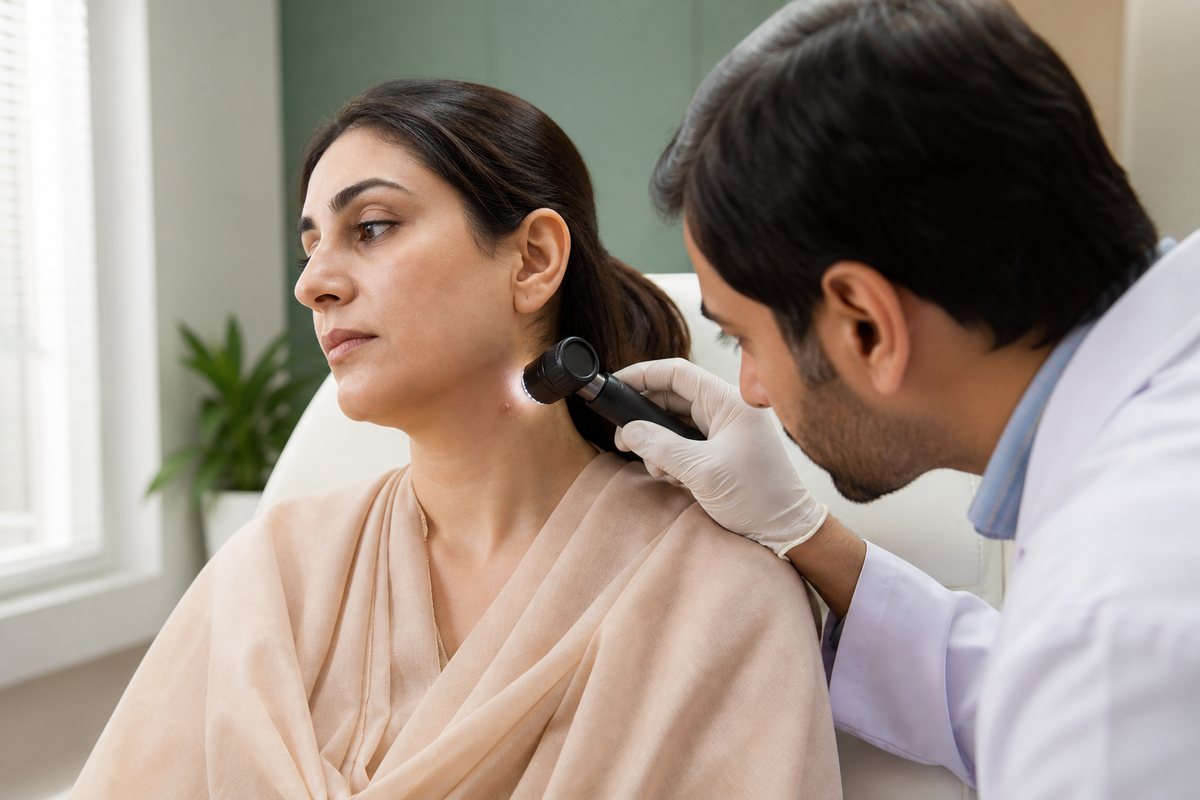
Skin tags, moles and warts are different lesions and should not automatically receive the same laser or cautery treatment. Diagnosis comes first, especially for a new, changing, irregular, bleeding or repeatedly crusting lesion.
Read patient guide →Independent patient information
These external resources support further reading. They do not replace advice from the clinician responsible for your care.
Why choose Dr Husnain Aesthetic Clinic?
Care is led by Assoc. Prof. Dr Husnain Khan, MBBS, MCPS, FCPS, MRCS. He has more than 17 years of experience in plastic surgery, serves as Head of the Department of Plastic Surgery at Holy Family Hospital, Rawalpindi, and has worked in the UK NHS. His GMC reference is 7427786.
No page can decide your suitability or promise a result. Consultation is used to explain reasonable options, limitations, recovery and costs.